

SEJournal Online is the digital news magazine of the Society of Environmental Journalists. Learn more about SEJournal Online, including submission, subscription and advertising information.
January 28, 2026
 |
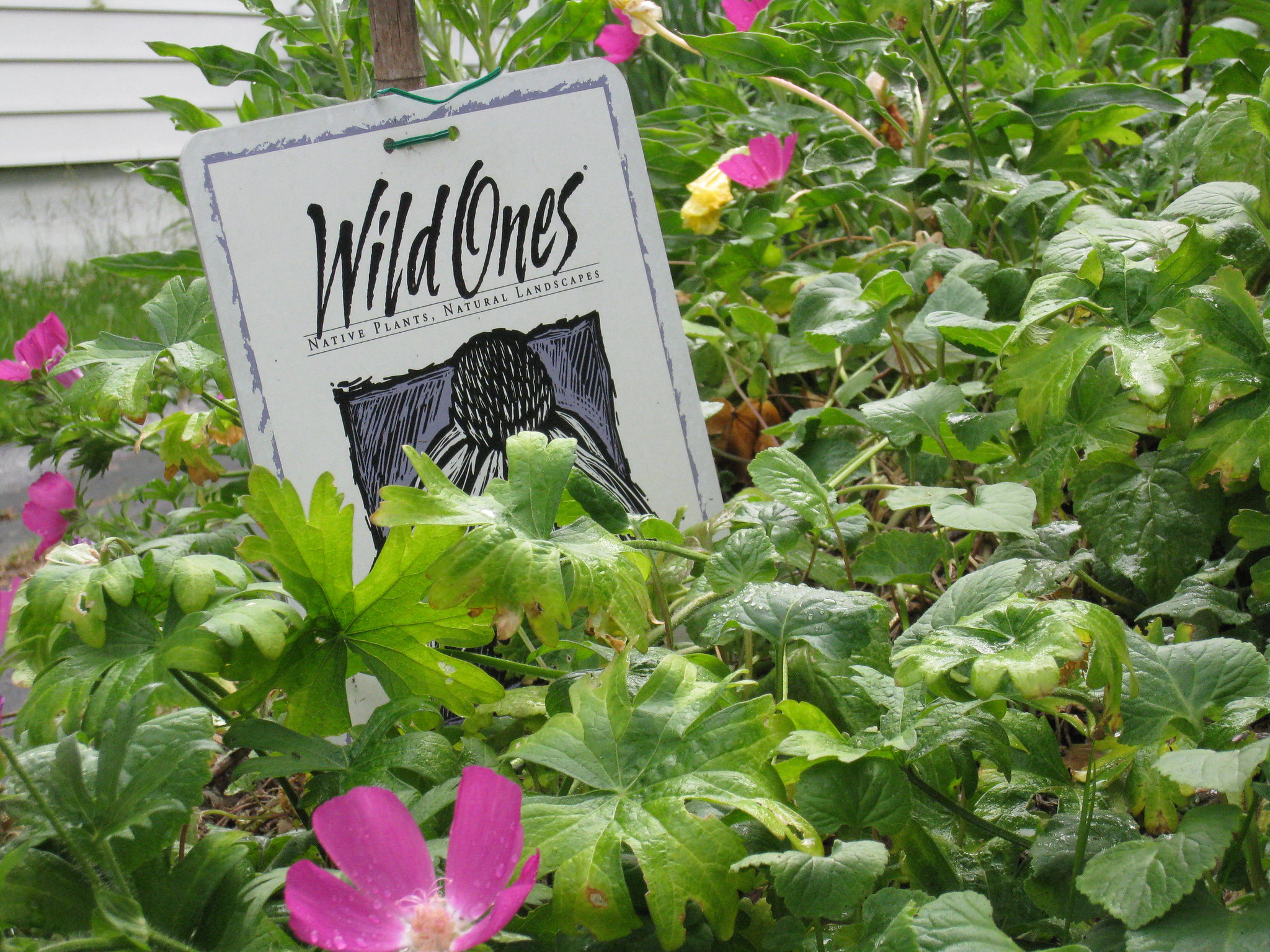 |
| Purple poppy mallow and Missouri evening primrose in a front-yard native-plant garden. Replacing lawns with native plants is one form of rewilding. Photo: Anne McCormack via Flickr Creative Commons (CC BY-NC 2.0). |
Feature: The Joy of Rewilding
By Kat Tancock
A farm in Ontario installing wildlife hedges. A group of volunteers in Minnesota gathering and distributing native seeds. The pros and cons of various ways to remove your lawn. A community-led pollinator corridor in Melbourne, Australia. A couple planting millions of mangroves on Mexico’s Pacific coast.
These are just a few of the stories Domini Clark and I have told in Rewilding Magazine, an online publication we launched from our homes in Canada in 2020.
Our goal is to expose more people to the idea of rewilding and the amazing things happening around the globe to help restore natural processes and boost biodiversity — and hope.
What is rewilding?
Rewilding is a concept that’s both easy and hard to define.
One thing that drew us to the concept was its built-in branding: “rewilding” sounds attractive, positive and exciting, unlike the boring science-speak of its cousins, like “conservation” or “ecological restoration.”
We knew this was an idea that could get people engaged. In this sense, most people would interpret the word as meaning something like “making things wilder” or “going back toward a state when humans hadn’t messed things up so much.”
Simple and straightforward, right?
Of course, the word “wild” itself is fraught,
encompassing colonialist overtones
and an adversarial approach to the
human relationship with nature.
Of course, the word “wild” itself is fraught, encompassing colonialist overtones and an adversarial approach to the human relationship with nature.
Talking about rewilding, we risk advocating for a target of a “pure” nature, “unsullied” by human impact, like the landscapes European settlers imagined (and, in many cases, still believe) they were encountering when they arrived in the Americas and other parts of the world.
It’s important to be cognizant that much of the planet has been stewarded by human communities for many millennia, and only in some cases has human action resulted in overwhelming destruction like we see in our current era. (Sophie Yeo’s book “Nature’s Ghosts” is a good overview of some of this.)
That’s why scientists and other experts today tend to be careful to include human communities in rewilding theories and projects, though of course there is debate, as the evidence clearly shows many people can’t be trusted to take care of nature.
Suffice it to say, the word “rewilding” is nebulous and, in some cases, overused, especially in the United Kingdom.
For more on these issues, we recommend the paper, “Guiding principles for rewilding” by Carver et al., published in Conservation Biology in 2021.
From large carnivores to less lawn
When reviewing pitches from writers, one of the questions we ask is, “Is this rewilding?”
It’s surprising how many queries we get that aren’t rewilding — after all, it’s in our name!
The rough definition we use, keeping in mind that things are way more complicated than this, is whether something or someone is making a place more wild.
What does that mean to us? On a scale of 0 to 10, if 0 is a “wilderness” where no humans have ever been present and 10 is a completely barren strip of pavement in the middle of a huge city, we want to see the numbers going lower, keeping in mind that 0 is not the goal.
And while some consider only bigger projects incorporating large carnivores or other keystone species to truly be rewilding, we tend to be quite inclusive. For example, gardeners who want to reduce lawn and plant more native species are a big part of our audience, and we believe they’re very important for the rewilding movement as a whole.
Behind the publishing scenes
We don’t only want to promote rewilding as a concept and bring more attention to positive action taking place. We also want to inspire people to get involved and take action themselves.
We’ve been inspired by the Solutions Journalism Network and the idea that environmental journalism needs more good-news stories. Not that uncovering the bad things isn’t important. That simply wasn’t the place we wanted to take up in the ecosystem.
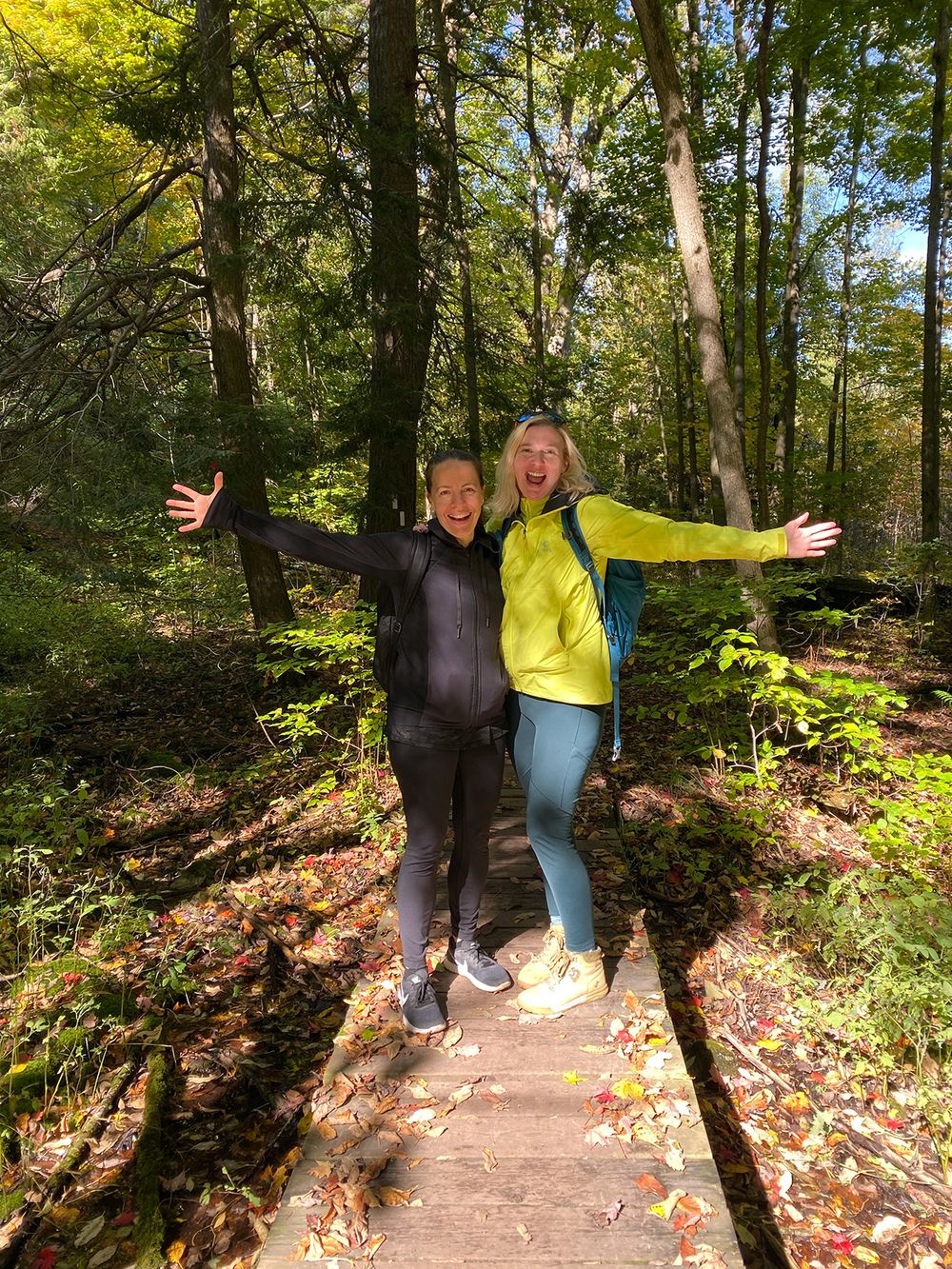 |
| Rewilding co-founders Kat Tancock, left, and Domini Clark. Photo: Alyssa Schwartz. |
We chose a digital platform because we didn’t have the time or the money to work in print, as much as we would have loved to. (Anyone have a print budget lying around?)
We were also keen to reach a global audience rather than restricting ourselves to Canada or North America.
We began on Squarespace, but quickly migrated to Ghost. It has been a good platform overall, though we’ve had to navigate some limitations, mainly around charging sales tax to our fellow Canadians. (Luckily, we found a workaround.)
As experienced digital journalists, we knew we didn’t want to be dependent on social media platforms, so we started collecting email addresses from Day 1 and SEO-optimizing as much as possible. That said, we do publish some things on social media and have found a solid audience of keeners who click on Mastodon, of all places.
Our readership also posts our stories a lot on Facebook, so we do get traffic from there even though we don’t post there ourselves. (Actually, one of our original goals was to publish the kinds of stories that people would share on Facebook.)
Interestingly, our search traffic is still strong and even grew in 2025, unlike what we’ve been hearing from other publications. This is probably because we cover such a niche topic.
One nice surprise a year or two in was receiving an email from a reader asking how he could give us money. We hadn’t turned on the subscription system in Ghost yet, but we quickly did and have had a small but loyal group of paid subscribers ever since.
We decided at the start to avoid advertising, as we didn’t want to get involved in greenwashing (which is probably the kind of ads we would attract), though we’ve done some paid content projects with the David Suzuki Foundation that have helped keep us in the black and able to continue to pay writers.
And yes, we do pay writers, and we do accept pitches. You can find our pitching guidelines by clicking “Contact” in our site footer.
Where we go from here
I’m not going to lie — it’s a lot of work running Rewilding, and as editors, we don’t take any income from the site: All our revenue goes to freelancers and to costs like web hosting and email.
But it’s always gratifying to see stories come out and readers respond to them. One recent email that brightened my day included the words, “I think you are putting out amazing material.”
There’s something about
rewilding stories that speaks
to people who feel discouraged
by the state of the world.
I think there’s something about rewilding stories that speaks to people who feel discouraged by the state of the world. It’s comforting to know that there are things going right and individuals out there making a difference.
Our hope is that this kind of storytelling will help build public support for everything from front-yard native plant gardens to multimillion-dollar wildlife bridge and corridor projects, things that will actually move the needle when it comes to the biodiversity crisis.
And we believe there can never be enough of these projects, large or small — or of good journalism that covers them.
Kat Tancock is co-founder and co-editor of Rewilding Magazine, which publishes biweekly-ish online.
* From the weekly news magazine SEJournal Online, Vol. 11, No. 4. Content from each new issue of SEJournal Online is available to the public via the SEJournal Online main page. Subscribe to the e-newsletter here. And see past issues of the SEJournal archived here.
SEJ Publication Types:
Topics on the Beat:
Visibility: