




SEJournal Online is the digital news magazine of the Society of Environmental Journalists. Learn more about SEJournal Online, including submission, subscription and advertising information.
April 1, 2026
 |
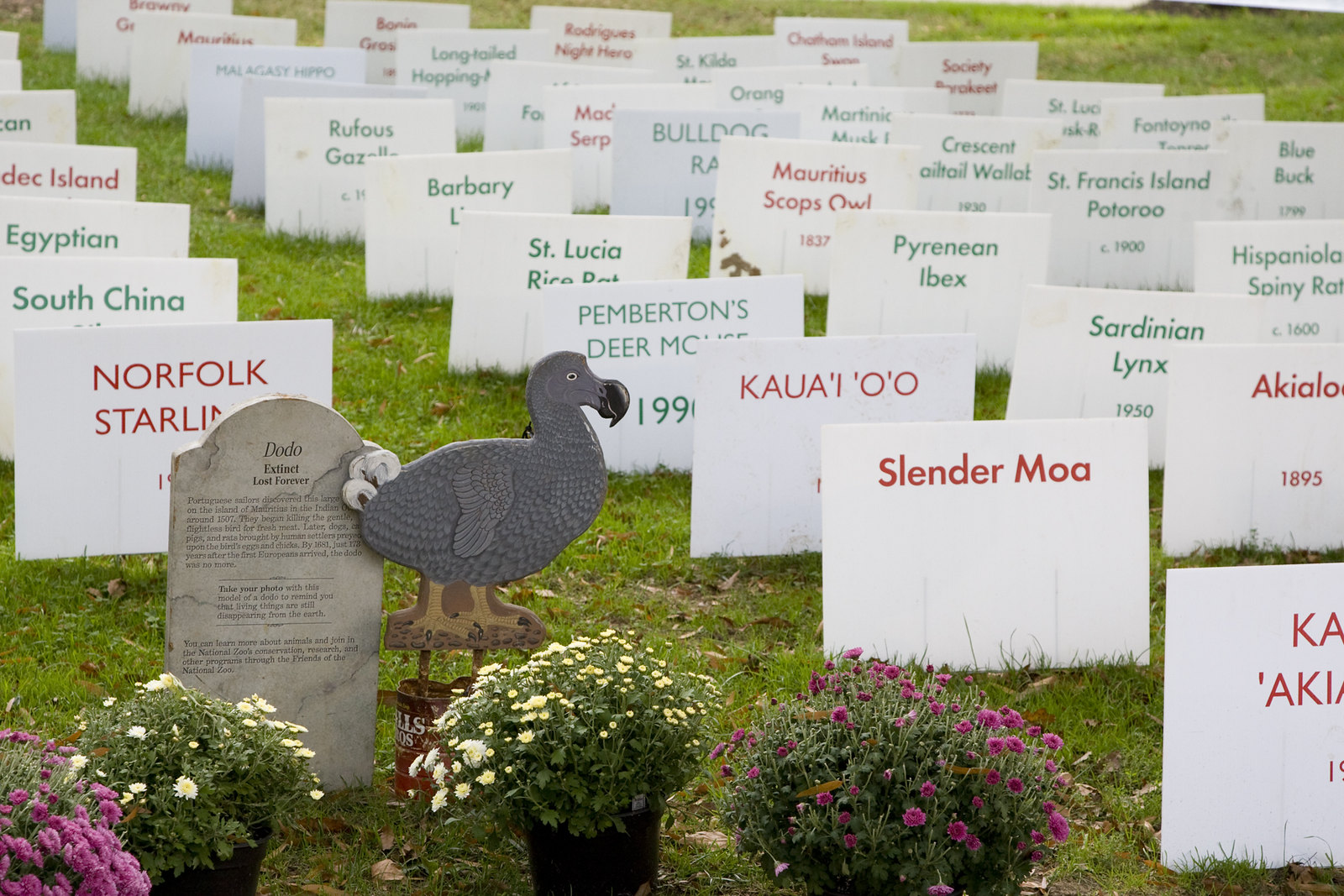 |
| A display marking extinct species at the Smithsonian’s National Zoo in Washington, D.C. Photo: National Zoo/Mehgan Murphy via Flickr Creative Commons (CC BY-NC-ND 2.0). |
Feature: Why I Write About Extinction
By John R. Platt
Like a lot of journalists, I love writing underdog stories.
For me, though, covering an underdog story might mean reporting about red wolves — or wolf spiders or wolfsnails.
For more than 20 years, I’ve been on the extinction beat, writing stories about rare or endangered species, the people trying to understand what’s threatening them or how to save them, and the plants and animals it’s now too late to save.
Along the way, I’ve written more species “obituaries” than I ever imagined I might.
Most recently, I collected the stories of more than 30 species declared extinct in 2025. Many of these disappearances were caused by the same factors that threaten people around the world: climate change, pollution, development, income inequality and introduced diseases.
But at the same time, I’ve written about species recoveries, rediscoveries, conservation victories (big and small), scientific breakthroughs and the very human efforts behind them all.
That’s one of the secrets of the
extinction beat: You’re really
writing about people — at
their worst and at their best.
That’s one of the secrets of the extinction beat: You’re writing about animals and plants, but at the same time you’re really writing about people — at their worst and at their best.
Yes, it’s a difficult beat, one with more bad news than good. But looking back at the past couple of decades, I can see several reasons why I’ve stuck with it.
Writing about extinction is (believe it or not) hopeful
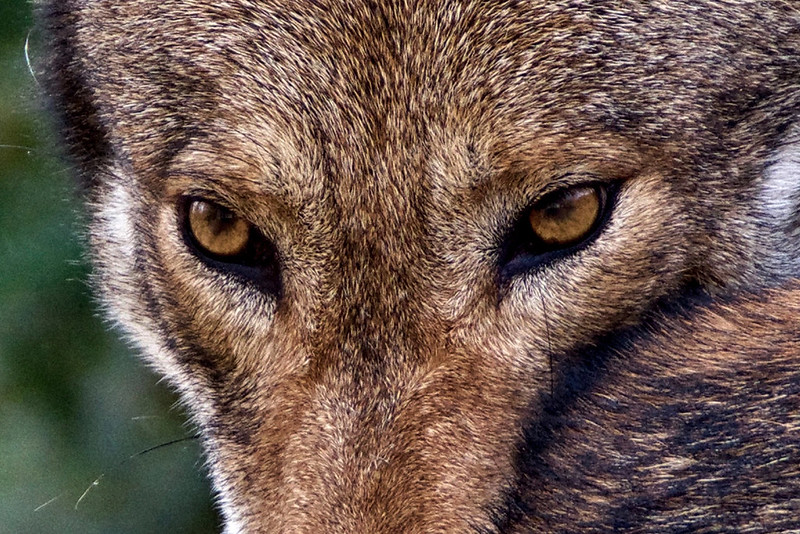 |
| The red wolf, the world’s most endangered wolf. Photo: ucumari photography via Flickr Creative Commons (CC BY-NC-ND 2.0). |
I’ve said this several times over the past few years: Writing about extinction is an inherently hopeful act.
That might seem like a disconnect, but here’s the truth: Although I’ve covered hundreds of extinctions, I’ve written or edited thousands of articles about species surviving, often with the help of scientists and conservationists, sometimes through their own tenacity.
Even the negative stories — the tales of population declines or disappearances, the new threats that emerge, the projections of climate change — only happen because people are looking into those problems. And the discovery of a problem is the first step toward a solution.
That’s another secret of the extinction beat: While the word “extinction” implies a finality, the journalism surrounding it is rarely about “the end.” Instead, it’s often about preventing that end.
We write about what has been lost, what’s being lost, to ensure we have the knowledge and the collective will to prevent further declines or the next extinction.
Every story is potentially a lesson in what to protect and a road map for how to do it better.
Extinction is about people
Behind every endangered species is a spider’s web of scientists, activists and local communities whose lives are intertwined with that animal or plant.
Telling their stories and describing their passions or dramas brings a relatability to stories about species who can’t speak on their own — which might otherwise be more challenging when writing about unfairly maligned creatures like snakes, insects or parasites.
When we write about a species on the brink, we’re often also writing about the people who refuse to let it go — the ones who spend their lives in remote habitats, in labs or in the halls of government, fighting for creatures who will never know their names or who few people will ever see.
And that’s another secret about the extinction beat: These people can also be the underdogs of your story. They’re the ones fighting the system, often against seemingly impossible odds.
Extinction is about culture
Our societies are built upon observations of the natural world. When that world unravels, so does human culture.
Take sports, for example. How many teams are named after rapidly disappearing species? Or employ animals as their anthropomorphic mascots? What would the Detroit Tigers be without actual tigers?
Or go deeper, into our religions, fables, creation stories, idioms, slang, pop culture. They’re all deeply rooted in the natural world and in the ecosystems that we inhabit.
When a species goes extinct, it isn't just a biological loss; it’s a cultural one. We lose a piece of the world that informed our ancestors' stories and our children’s imaginations.
Writing about extinction is, in many ways, an act of cultural preservation. We’re helping to prevent the “extinction of experience” — where we even forget the way things once were.
Plants and animals can’t tell their own stories
One major reason why endangered species are underdogs is that they can’t tell their own stories — at least, not directly. They can’t explain to indifferent humans how their habitats are changing or advocate for their right to exist.
As journalists, we act as their translators, bringing the dangers they face into the light for a world that might otherwise overlook them — and in the process, perhaps, we provide a new lens to help our readers understand the threats we all face.
Plastic pollution is an obvious example. The photos of sea turtles with plastic straws up their noses helped change behavior for many people.
More broadly, can describing the threats a species faces from climate change, PFAS pollution or wildfires help readers understand that those threats are coming for them, too?
Every species is amazing
Let’s step back from the doom and gloom and remember that just about every species has something amazing about it. A certain biological function, unique vocalizations, mating habits, feeding behaviors, migratory feats …
Conveying the awe about nature
can inspire pro-environmental
behaviors, such as helping and
supporting conservation efforts.
A recent paper found that conveying the awe about nature can inspire pro-environmental behaviors, such as helping and supporting conservation efforts. Even extinct species had unique qualities that we can recognize and mourn.
Think of chimpanzees. How much more endangered would they be today if Jane Goodall hadn’t spent years studying their behavior and bringing that story to the world (with the help of many journalists)?
As an aside, one of the most frustrating things about covering extinct and endangered species is the dearth of good photos for many of them. But when you finally find the right image? That can often sell your story as well as your words.
If not me, who else?
I often ask myself: If I don’t cover these stories, who else will?
Despite the stakes, extinction stories remain chronically underrepresented in environmental journalism and in the broader media landscape. We’re saturated with political commentary, influencer videos and sports analysis, but the literal disappearance of life on Earth often struggles to find space on the front page — let alone manage to reach eyeballs through social media algorithms.
But I’m always surprised. My stories do find readers, and they make a difference. They’ve inspired fundraisers, petitions, podcasts and even a death-metal album. They’ve been cited in lawsuits and the Federal Register. They’ve brought “thank you” emails from readers around the world, many of whom have found ways to explore their grief for a disappearing world, or who have found their own ways to participate in conservation.
And so, as I do whenever I talk about this subject, I’ll now turn my question around: Why not you?
Joining the extinction beat is not just a professional choice. It can be a deeply rewarding and emotional journey, a chance to stand out from the pack, an opportunity to tell unique stories and a way to make a difference.
Reporting stories about species teetering on the brink of extinction allows you to tap into local expertise, explore your own regional culture and highlight species who exist in your own backyard. Or you can focus on faraway animals who rank high in our popular culture, or even species who few people realize even exist.
From a practical standpoint, you won’t be competing with 1,000 other climate journalists for the same headline. Instead, you may find new, vital angles that resonate with readers on their own emotional levels — and keep them coming back for more.
And in a world where journalism itself is an endangered species, that might be one of the best reasons of all.
[Editor’s note: This article is a joint publication of SEJournal and The Revelator.]
John R. Platt is an award-winning editor and journalist telling stories about the environment, science, the arts, justice and philanthropy. He is editor of The Revelator, an editorially independent news and ideas initiative of the Center for Biological Diversity, and a contributing editor to SEJournal.
* From the weekly news magazine SEJournal Online, Vol. 11, No. 13. Content from each new issue of SEJournal Online is available to the public via the SEJournal Online main page. Subscribe to the e-newsletter here. And see past issues of the SEJournal archived here.
SEJ Publication Types:
Topics on the Beat:
Region:
Visibility: