

SEJournal Online is the digital news magazine of the Society of Environmental Journalists. Learn more about SEJournal Online, including submission, subscription and advertising information.
May 20, 2026
 |
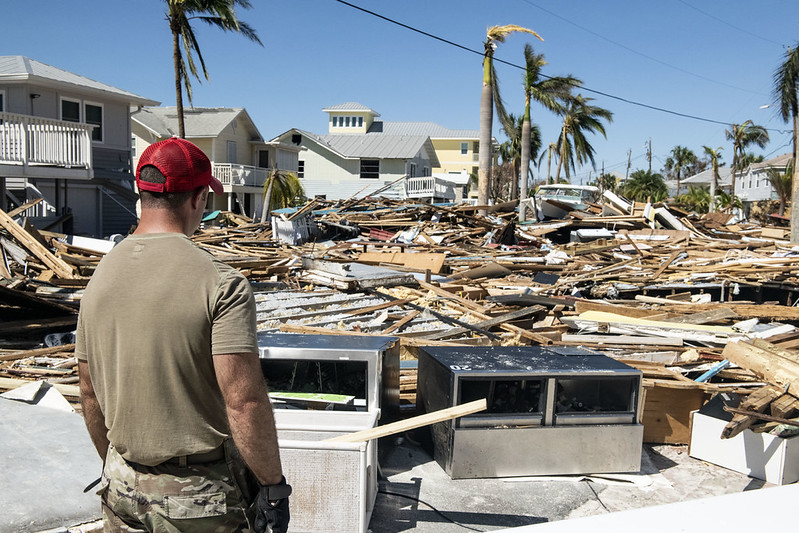 |
| The aftermath of Hurricane Ian in Fort Myers Beach, Florida, on Sept. 30, 2022. Photo: U.S. Air National Guard/Jesse Hanson via Flickr Creative Commons (CC BY 2.0). |
Inside Story: Reporters Expose Failed Systems After Hurricane Ian, Maui Fires
Government investigations into the Maui fires and Hurricane Ian are the focus of “Investigations Following Hurricane Ian and the Maui Fires,” a reporting project by Brianna Sacks with photojournalists Mengshin Lin and Thomas Simonetti for The Washington Post. The team conducted in-depth reporting examining both the human toll of these disasters and the systemic failures tied to Florida insurance companies and Maui utilities.
The project earned recognition from the Society of Environmental Journalists in its 23rd Annual Awards for Reporting on the Environment, where Sacks’ coverage won second place for Outstanding Beat Reporting, Large. Judges praised the work for its “impressive mix of deep reporting,” highlighting its ability to connect personal impacts with broader institutional accountability.
The reporting underscores the role of investigative journalism in bringing transparency to disaster response and recovery systems, while elevating the experiences of affected communities. SEJournal Online recently spoke with Sacks by email. Below is the conversation, edited for clarity and style.
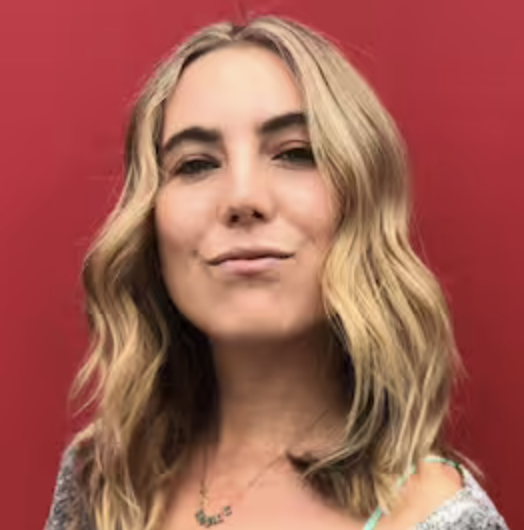 |
| Brianna Sacks |
SEJournal: How did you get your winning story idea?
Brianna Sacks: Just being on the ground doing my job. 😄
SEJournal: What was the biggest challenge in reporting the pieces and how did you solve that challenge?
Sacks: Reporting on disasters is intense, fast-paced and risky. You have to know how to navigate complex environments, often without power, reliable food and good logistics. It's very much thinking and acting by instinct and on the fly. On top of this, I was looking for accountability angles that also brought to light the suffering people, especially those already on the edge, face. I then paired that with long-term investigations into the bodies, such as insurance companies, who are supposed to ease this suffering. It's challenging to juggle all of this at once, break news, connect with survivors who are extremely vulnerable and stay on these stories for months on end. I don't think I "solved" anything; I just trusted my gut and pulled a lot of all-nighters.
SEJournal: What most surprised you about your reporting?
Sacks: How easily insurance companies go unscrutinized and how common it is for policyholders to receive low payments despite doing all the right things.
SEJournal: How did you decide to tell the stories and why?
‘They are complicated, messy,
heartbreaking and fascinating
case studies on human resilience.’
Sacks: My passion is reporting on all aspects of a disaster: What causes them, how people survive them, what they lose and the entities that profit off this loss. They are complicated, messy, heartbreaking and fascinating case studies on human resilience. All of that, I believe, is important to convey in different kinds of stories over a period of time.
SEJournal: Does the issue covered in your story have disproportional impact on people of low income, or people with a particular ethnic or racial background? What efforts, if any, did you make to include perspectives of people who may feel that journalists have left them out of public conversation over the years?
Sacks: Yes. I try and focus my work on those who were already vulnerable and living on the edge. During my reporting on the aftermath of Hurricane Ian, I spent time with a father who was a convicted felon with addiction issues. His wife was working three low-wage jobs at grocery stores and gas stations to make ends meet. They had eviction and credit problems, so finding housing was extremely difficult, especially with the cost of rent post-disaster. They ended up homeless and then living in a motel. People like this often become invisible when reporting on disasters because they are already on the fringes of society, yet they are the ones who often struggle the most and need help that the system often fails to provide.
SEJournal: What would you do differently now, if anything, in reporting or telling the stories and why?
Sacks: I would have thought more creatively about the visual aspect of this storytelling and brought these voices and experiences to different platforms. And not given my editor such a hard time!
SEJournal: What lessons have you learned from your stories?
Sacks: That a powerful story can sometimes be in plain sight. A simple motel ended up being one of my favorite reporting experiences I have had because I got to sink in and spend time with people who I otherwise would have just kept driving by.
SEJournal: What practical advice would you give to other reporters pursuing similar projects, including any specific techniques or tools you used and could tell us more about?
Sacks: To be relentless and sensitive at the same time. Checking time stamps on data and social media videos when trying to piece together the cause of a fire can lead to some big breakthroughs.
Brianna Sacks is a Los Angeles, California-based disaster correspondent for The Washington Post. She explores how climate change is transforming the United States through violent storms, intense heat, widespread wildfires and other forms of extreme weather. She deploys to disaster zones and does enterprise reporting on the preparations for, responses to and aftermaths of catastrophic events. She has been covering disasters since 2017, and has been on the ground for every major California wildfire. She specializes in investigative and accountability reporting, as well as breaking news. She reports on disasters comprehensively and empathetically, showing how one climate-change-fueled event impacts every facet of life, particularly those most vulnerable and historically marginalized.
* From the weekly news magazine SEJournal Online, Vol. 11, No. 20. Content from each new issue of SEJournal Online is available to the public via the SEJournal Online main page. Subscribe to the e-newsletter here. And see past issues of the SEJournal archived here.
SEJ Publication Types:
Topics on the Beat:
Visibility: