

SEJournal Online is the digital news magazine of the Society of Environmental Journalists. Learn more about SEJournal Online, including submission, subscription and advertising information.
December 17, 2025
 |
 |
| An account of the toxic rail spill in East Palestine, Ohio, in 2023, won first prize for outstanding feature story, large, in the Society of Environmental Journalists’ 23rd annual awards contest. Photo: Screenshot. |
Inside Story: A Town Derailed, a Trust Obtained
The worst hazardous chemical train accident in recent U.S. history occurred on Feb. 3, 2023, in the small town of East Palestine, Ohio, near the Pennsylvania border. A train carrying 11 tanker cars of extremely toxic chemicals crashed and burned, contaminating the town of 4,700 with a nightmarish cocktail of carcinogenic materials that residents say led to a wide range of physical and mental health ailments.
A year-long investigation into the disaster, led by photojournalist Rebecca Kiger and Time magazine staff writer Alejandro de la Garza, won first place for Outstanding Feature Story, Large, in the Society of Environmental Journalists’ 23rd Annual Awards for Reporting on the Environment.
SEJ judges were impressed with the in-depth storytelling and reporting for this comprehensive story: "This beautiful, heartfelt look at the small town of East Palestine, Ohio, unpacks the aftermath of a devastating toxic train derailment. The reporter and photographer use documentary photography, in-depth reporting and earned trust and respect to chronicle the aftermath of the chemical spill: the people suffering and struggling from and grappling with it, and the responses from business and government. The result is a comprehensive, year-long deep dive into the wake of a man-made disaster.”
SEJournal Online interviewed Kiger and de la Garza by email about the project. Here’s the conversation, lightly edited for clarity and style.
SEJournal: How did you get your winning story idea?
Rebecca Kiger: I first covered the crisis for The Washington Post days after the derailment. After making several reporting trips for them, I was approached by Alice Gabriner, the director of the Center for Contemporary Documentation, with encouragement to continue documenting. Simultaneously, Kara Milstein from Time reached out, curious to know more about the environmental impact. Together, we decided there were resources to allow me to continue following the aftermath of the chemical spill.
Alejandro de la Garza: The piece wasn't actually my idea to start. Rebecca Kiger was doing a lot of photo reporting on the East Palestine train disaster after the accident, and the Center for Contemporary Documentation and Time had reached out to her about doing something more in-depth following the recovery. I had just wrapped up a long-form project that was meant to be something like a "profile of a town" a couple of months before, and the Time photo editor Kara Milstein came to me and asked if I wanted to work on a written component for the piece. It wasn't clear yet if it was going to be a pretty short piece or a long-form, more deeply reported article, but all three of us agreed that the more written work we added to support Rebecca's photos, the better.
SEJournal: What was the biggest challenge in reporting the piece and how did you solve that challenge?
Kiger: The biggest challenge was listening to the varying opinions and voices about the train derailment and its impacts. Much was not known and is still not known, though the National Train and Safety Board did release the findings of their investigations in June 2024. I chose to listen to people and focus on what I could observe clearly — the actions they took based on their experience and expertise to confront their new reality, albeit unknown.
Simply separating fact from fiction
and getting the science straight
was a huge challenge.
— Alejandro de la Garza
De la Garza: Rebecca probably dealt with the lion's share of the reporting challenges; she was in and out of East Palestine about 50 times over the course of the year, and she was feeding reporting to Kara and me back in New York. For me, simply separating fact from fiction and getting the science straight was a huge challenge. I wanted to go deep into the science in an accessible way, but that first required educating myself on a huge range of technical concepts in a really challenging information environment with lots of folks trying to spin me. It was clear that what the U.S. Environmental Protection Agency was saying wasn't the whole story, but it also would have been irresponsible to take all the claims about what was happening at face value. Ultimately, I think we got the right balance, but it took a lot of work.
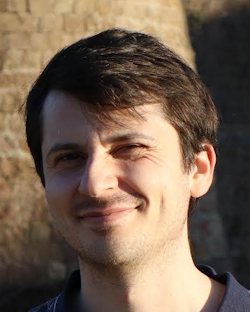 |
| Alejandro de la Garza |
SEJournal: What most surprised you about your findings?
Kiger: What most surprised me (and made me proud) were the efforts made by people like Robin Seman, Misit Allison and Lisa Mahoney, to name a few, to be thorough and diligent in their personal efforts to understand what was happening in East Palestine, while acting honorably and kind in their relationships with others.
De la Garza: I think the division between different camps in town that came up over the course of the year was naturally a big surprise and ended up becoming one of the main focuses of the piece. It's almost as if people are living in two different realities. But another big surprise was coming to understand how little we know about what constitutes "safe" levels of exposure to a lot of these chemicals, and regarding mixtures of chemicals. In a lot of cases, there just isn't that much data to go on. But the job of the EPA, I gather, isn't to make people worry about the unanswered questions; it's to make decisions for them and project calm.
SEJournal: How did you decide to tell the story and why?
The people it affects deserve
to be seen, and they deserve time,
respect and thoughtful reporting.
— Rebecca Kiger
Kiger: I live just over an hour south of East Palestine, the Appalachian Rust Belt, home to extractive industries, their byproducts and insidious environmental consequences. When over a million pounds of vinyl chloride leaked into the soil, air and water in East Palestine, the dangers of living in the petrochemical corridor went from insidious to apparent. The people it affects deserve to be seen, and they deserve time, respect and thoughtful reporting.
De la Garza: Well, Rebecca was already doing this beautiful black-and -white photography, and I wanted my story to complement that, but to also add a level of in-depth scientific context and characterization of the town to match the level of work she was putting in. We talked a lot about the direction the story should go, and she was really dedicated to the idea that this piece would reflect the real experiences of people in this town. After I made my reporting trip and talked to our sources in person, I decided to use this idea of "unreality" settling over East Palestine as the main idea to base the story around, because this was the idea that seemed to unify almost the entire town's experience into one true statement.
SEJournal: Does the issue covered in your story have a disproportional impact on people of low income, or people with a particular ethnic or racial background? What efforts, if any, did you make to include perspectives of people who may feel that journalists have left them out of public conversation over the years?
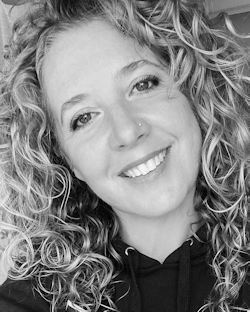 |
| Rebecca Kiger |
Kiger: This particular region of Appalachia faces the environmental injustice experienced by those living along Cancer Alley in Louisiana.
De la Garza: I think a pretty large share of East Palestine's population is low-income, and low-income people in the town often were the ones facing the worst effects from the derailment disaster. This part of the country is also a newspaper desert. In the case of East Palestine, there's been a lot of attention over the year after the derailment, but I think a lot of people felt like their story was getting spun for other people's purposes. So basically, the entire point of this project was to give the narrative back to the people who have actually lived through this disaster.
SEJournal: What would you do differently now, if anything, in reporting or telling the story and why?
Kiger: I would have been more cautious around the site of the chemical spill.
De la Garza: I don't think I would change anything. I think we got it right.
SEJournal: What lessons have you learned from your project?
Kiger: The lesson I have learned is that there is not much funding available from publications for long-form journalism, even though we need it now more than ever. I was able to work on this story because of the grant given to me by the Center for Contemporary Documentation and because of the fact that I have other sources of income.
De la Garza: I wasn't expecting to get a straight story from the government agencies I was talking to, but I suppose I wasn't quite ready to see the "misinformation, disinformation" playbook used to quite this extent in dismissing competing narratives about what happened and what went wrong. I suppose the task of these agencies, as I've mentioned, is to make a plan and act on it, and then project calm and control, and they can be very slow or perhaps unwilling to acknowledge that things perhaps haven't been properly accounted for or aren't working.
SEJournal: What practical advice would you give to other reporters pursuing similar projects, including any specific techniques or tools you used and could tell us more about?
As creative as we are in our storytelling,
we also need to be creative in
finding sources of funding
to work on projects.
— Rebecca Kiger
Kiger: As creative as we are in our storytelling, we also need to be creative in finding sources of funding to work on projects. Long-term storytelling means we don't have to barge in at all costs. It allows us to get to know the people we are photographing and, when important, to put down the camera and just listen.
De la Garza: Talking to a lot of outside experts and understanding the background and expertise of those folks is really crucial. There are folks around the East Palestine disaster who project the "scientist" mantle, but in fact don't really know what they're talking about, so you have to be careful about who you're listening to. Getting a solid grounding in the science and the mechanics of a disaster like this in order to understand the context for what residents and experts are saying can be difficult, but it can also mean the difference between just parroting a lot of competing claims and actually putting things into some kind of order to help elucidate the issues for the public.
SEJournal: Could you characterize the resources that went into producing your prizewinning reporting (estimated costs, i.e., legal, travel or other; or estimated hours spent by the team to produce)? Did you receive any grants or fellowships to support it?
Kiger: The grant came from the Center for Contemporary Documentation. Alice Gabriner, the director, who spent years as a photo editor, was incredibly supportive. None of the project would have been possible without the partnering from Time and its invaluable editorial resources, including photo editor Kara Milstein, writer Alejandro de la Garza and director of photography Katherine Pomerantz.
De la Garza: Rebecca's year of photography was supported by the Center for Contemporary Documentation. She got $500 per day and spent about 50 days traveling to East Palestine. Kara and I had meetings with her throughout that year, and then I worked on it for about two months through November and December. Then, Time paid for my trip down in December, which cost about $2,000. Kara spent a lot of time with the photos, and there was a big push by a lot of team members at the end to make a stand-alone site to host the project, create graphics, layouts, etc. Pretty difficult to estimate total hours, but I'd say it was in the multiple thousands.
SEJournal: Is there anything else you would like to share about this story or environmental journalism that wasn’t captured above?
Kiger: The story is ongoing, and the impact of the chemical spill will need to be monitored for decades.
De la Garza: There was a lot of effort made in this story to reflect the reality that people in East Palestine were facing and to make journalism that served them, even though we were coming in from a national publication. Rebecca built up a lot of trust with people in the community, and also grew to understand the emotional and physical reality of their situation on a really deep level from the huge amount of time she spent there, and I think that allowed us to make a piece that felt true to their experience, instead of feeling extractive toward their situation. We got a really good response from most people we'd talked to after the piece was published, and Rebecca and Kara brought in prints of about 120 photos from the course of the year and did an exhibition at the East Palestine library, which was very well-attended.
Rebecca Kiger is a documentary photographer based in the Rust Belt of Appalachia. For several years, she served as an artist-in-residence with the Rural Arts Collaborative and the Ohio Arts Council, facilitating yearlong photographic projects with high school students. She is a fellow with the Center for Contemporary Documentation and the current Knight Fellow at Ohio University. Her immersive coverage of the aftermath of the Norfolk Southern toxic train derailment in East Palestine was featured in Time magazine and honored by major photography organizations, including World Press Photo and POY (Community Awareness Award). She is currently working on a story in Appalachian Ohio with support from the Magnum Foundation. When not at Ohio University, she is based in Wheeling, West Virginia.
Alejandro de la Garza is a writer and freelance environmental journalist. Formerly, he was a staff writer at Time magazine, where he covered climate technology, energy and activism, authoring three cover stories. He was named as 2023’s Emerging Journalist of the Year by Covering Climate Now. Currently, he is an MFA candidate in fiction at the Helen Zell Writers’ Program at the University of Michigan, where he is writing a novel. He lives in Ann Arbor, Michigan.
* From the weekly news magazine SEJournal Online, Vol. 10, No. 45. Content from each new issue of SEJournal Online is available to the public via the SEJournal Online main page. Subscribe to the e-newsletter here. And see past issues of the SEJournal archived here.
SEJ Publication Types:
Topics on the Beat:
Visibility: