

SEJournal Online is the digital news magazine of the Society of Environmental Journalists. Learn more about SEJournal Online, including submission, subscription and advertising information.
February 11, 2026
 |
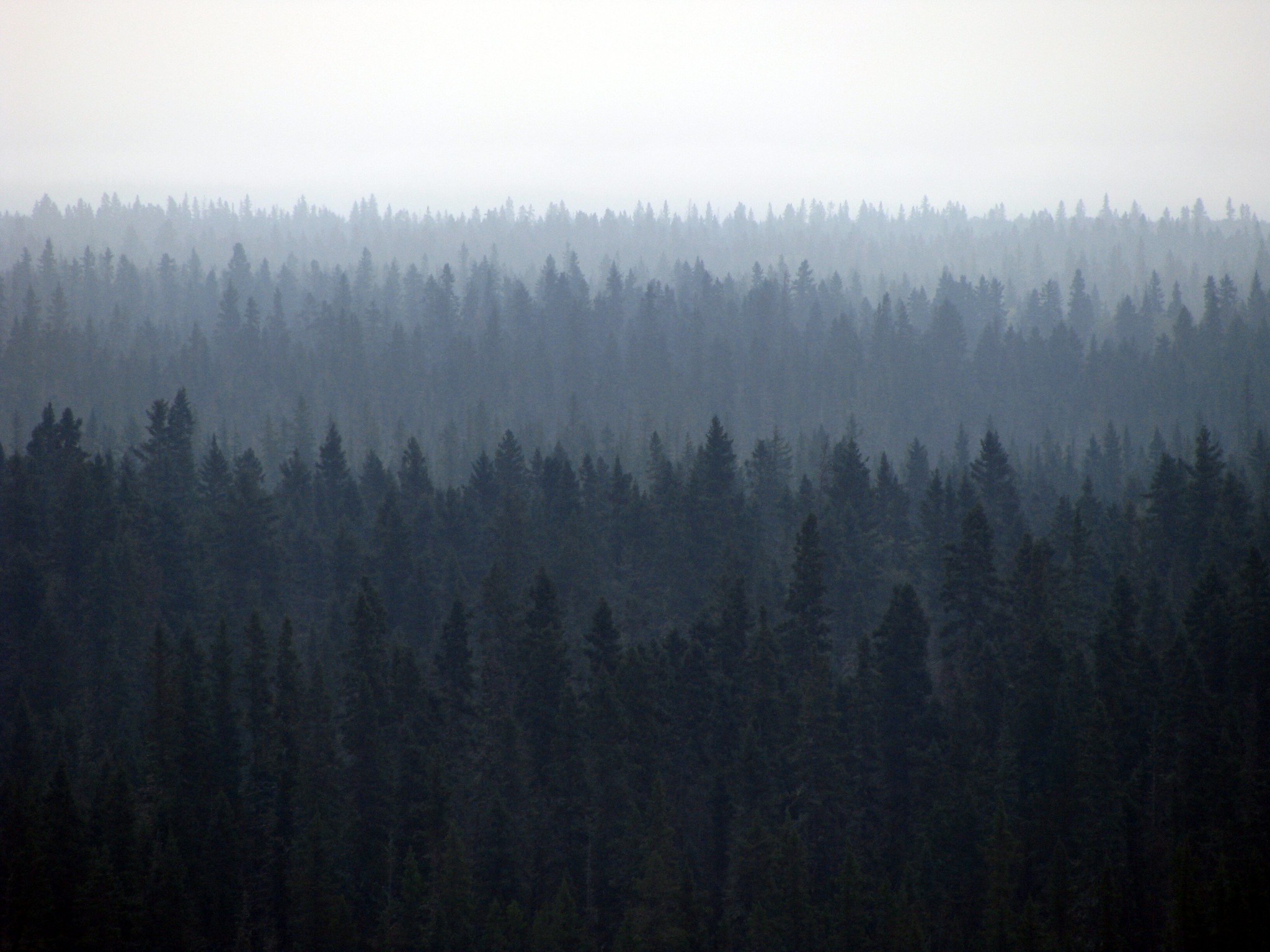 |
| Boreal forest shrouded in smoke from a forest fire, in the Salt Plains section of Wood Buffalo National Park, Canada’s largest, in northeastern Alberta and the southern Northwest Territories. Photo: Drew Brayshaw via Flickr Creative Commons (CC BY-NC 2.0). |
Reporter’s Toolbox: Database Details Planetary Asset — Canada’s Forests
By Joseph A. Davis
Canadian forests are a global resource, with more forest land (at roughly 912 million acres) than even its neighbor, the United States (at roughly 811 million acres).
But it’s about more than statistics.
Before climate heating took off,
Canada’s boreal forest was a
globally important carbon sink,
helping regulate the atmosphere.
For instance, before climate heating took off, Canada’s boreal forest was a globally important carbon sink, helping regulate the atmosphere.
And it’s important in many ways to everyone in North America. Both Canada and the U.S. sell and buy timber from each other. Also, many Americans love canoeing and fishing in wilderness areas like the Quetico and the Killarney Provincial Park.
But wildfires in Canadian forests also annually pollute the air that U.S. residents breathe (and often vice versa).
Where the data comes from
A good starting point for the Canadian forest is its national forestry database.
The source of this info is the Canadian Forest Service — the federal agency overseeing all of Canada’s forests. The fact that it is a federal database gives us confidence that the quality of the data is high. As good as any you’ll find.
More specifically, the database is mandated and overseen by the Canadian Council of Forest Ministers, which includes representation from each of the provinces (and so the database incorporates provincial data as well).
The data is all online and downloadable. Documentation is clear and complete. The Canadian Forest Service has extensively analyzed the numbers and presented the picture in tables and graphs. There are lots of provincial breakdowns.
By the way, if you want comparisons, you might start with the U.S. Forest Service data we outlined in a previous Toolbox.
How to use the data smartly
Canada’s national forestry database is a wonderfully articulated data world that will tell you way more than “how many acres of trees.” It helps answer some of the most important questions you could ask about forests.
One thing it quantifies, for example, is “wood supply,” i.e., the amount of timber cut and sold.
But let’s face it: Under Trump 2.0, the United States has been involved in all kinds of senseless and spiteful economic bullying, and it is a fraught time for fair economic comparisons.
The binational timber trade
has been a point of contention
between Canada and the U.S.
So not surprisingly, the binational timber trade has been a point of contention between Canada and the United States. The two nations trade different kinds of timber and have trouble agreeing on what volumes are fair.
Another thing the data quantifies is wildfires. As smoke migrates, the two nations are no longer separate. Smoke from Canadian fires has drifted across much of the United States in recent years, which residents of U.S. cities experience as air pollution. It goes both ways.
Canada’s database also quantifies insect damage, which can have a serious, negative impact on forest health and productivity in both nations. Insects also don’t stop at the border. The data quantifies pest control, too.
There’s more: The database specifically quantifies “harvest.” That is, how many hectares are cut. Moreover, it counts “regeneration” — how many acres are planted or seeded.
Finally, it sums up revenues: how much the governments make from timber sales.
But whatever numbers you’re exploring, don’t forget to look for the human stories behind the data. Talk to the people affected. Groundtruth whatever you can.
[Editor’s Note: For more, see a recent Backgrounder on how Trump’s tariffs have blown up the long U.S.-Canada environmental partnership, and a Feature on rethinking forest management. And get EJToday headlines on environmental issues related to Canada and to forests.]
Joseph A. Davis is a freelance writer/editor in Washington, D.C. who has been writing about the environment since 1976. He writes SEJournal Online's TipSheet, Reporter's Toolbox and Issue Backgrounder, and curates SEJ's weekday news headlines service EJToday and @EJTodayNews. Davis also directs SEJ's Freedom of Information Project and writes the WatchDog opinion column.
* From the weekly news magazine SEJournal Online, Vol. 11, No. 6. Content from each new issue of SEJournal Online is available to the public via the SEJournal Online main page. Subscribe to the e-newsletter here. And see past issues of the SEJournal archived here.
SEJ Publication Types:
Topics on the Beat:
Visibility: