

SEJournal Online is the digital news magazine of the Society of Environmental Journalists. Learn more about SEJournal Online, including submission, subscription and advertising information.
November 26, 2025
 |
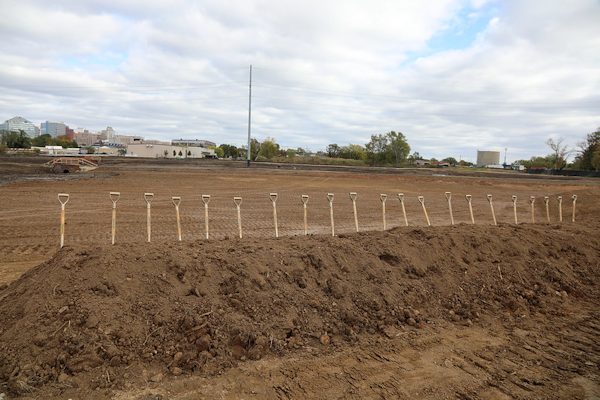 |
| The groundbreaking for South Wilmington Wetlands Park in 2019, a project partially funded by $3 million in federal grants. Photo: Sen. Chris Coons via Flickr Creative Commons (United States government work). |
Reporter’s Toolbox: Grants and Contracts Data — Fuel for Journalist-Gumshoes
By Joseph A. Davis
One database absolutely essential for investigative environmental journalists is USAspending.gov. It is supposed to give you data on most unclassified federal grants and contracts.
Years ago, SEJournal recommended similar databases for the U.S. Environmental Protection Agency. Those are obsolete, and it’s time for an update.
Pretty much all that’s left of
the old EPA-only databases is
found on the Wayback Machine.
Pretty much all that’s left of the old EPA-only databases is found on the Wayback Machine. The EPA itself offers information from the historic sewage treatment construction grants program — but that’s only of historical interest, because the program ended decades ago.
No, what we have today is USAspending.gov. That may be a good thing for a few reasons. For starters, it has a fairly sophisticated search engine that lets you query quite a few parameters.
It also allows custom multiagency searches — important because environmental reporters often need to be looking at more than just the EPA. For example, climate change work also happens at NOAA, NASA and many more agencies. Or, at the Interior Department, what matters may be the bureau or subagency (Park Service, Fish and Wildlife Service, etc.)
Where the data comes from
Basic federal laws require agencies to keep meticulous records about grants and contracts … as a way of ensuring government integrity.
Oh! Did we just say that? In the Trump era, it may no longer be a given.
And “pauses” in funding may be hard to parse, “clawback” is not a standard data field and some terms you may want to search on are now erased and forbidden (like “climate change”).
How to use the data smartly
Grants and contracts data is good for finding corruption, of course. The hard part is discovering the conflicts of interest. It takes more than data to do this; it takes savvy and an understanding of conflicts of interest. That — and a suspicious mind.
Government money can be about more than grants and contracts. It can come as loans, loan guarantees, tax breaks, procurement, etc. At the EPA, it can be about revolving loan funds (for drinking water and sewage treatment, which have their own databases). Or maybe it’s an oil lease.
Also: You can find more when you understand there are subcontractors and subgrantees. For example, a lot of the EPA’s environmental justice funding went to regional grantees, who then doled it out to more local groups. For other money, the pass-through point may be state agencies.
But searches are where USAspending shines. You can narrow it down by funding agency, date, time period, award amount, competitiveness, recipient type, industrial category, disaster type and other variables.
Especially in today’s political fun-house situation, it is important to check whatever the data seems to say, to talk to real humans and to groundtruth everything.
Joseph A. Davis is a freelance writer/editor in Washington, D.C. who has been writing about the environment since 1976. He writes SEJournal Online's TipSheet, Reporter's Toolbox and Issue Backgrounder, and curates SEJ's weekday news headlines service EJToday and @EJTodayNews. Davis also directs SEJ's Freedom of Information Project and writes the WatchDog opinion column.
* From the weekly news magazine SEJournal Online, Vol. 10, No. 42. Content from each new issue of SEJournal Online is available to the public via the SEJournal Online main page. Subscribe to the e-newsletter here. And see past issues of the SEJournal archived here.
SEJ Publication Types:
Topics on the Beat:
Region:
Visibility: