

SEJournal Online is the digital news magazine of the Society of Environmental Journalists. Learn more about SEJournal Online, including submission, subscription and advertising information.
July 8, 2026
 |
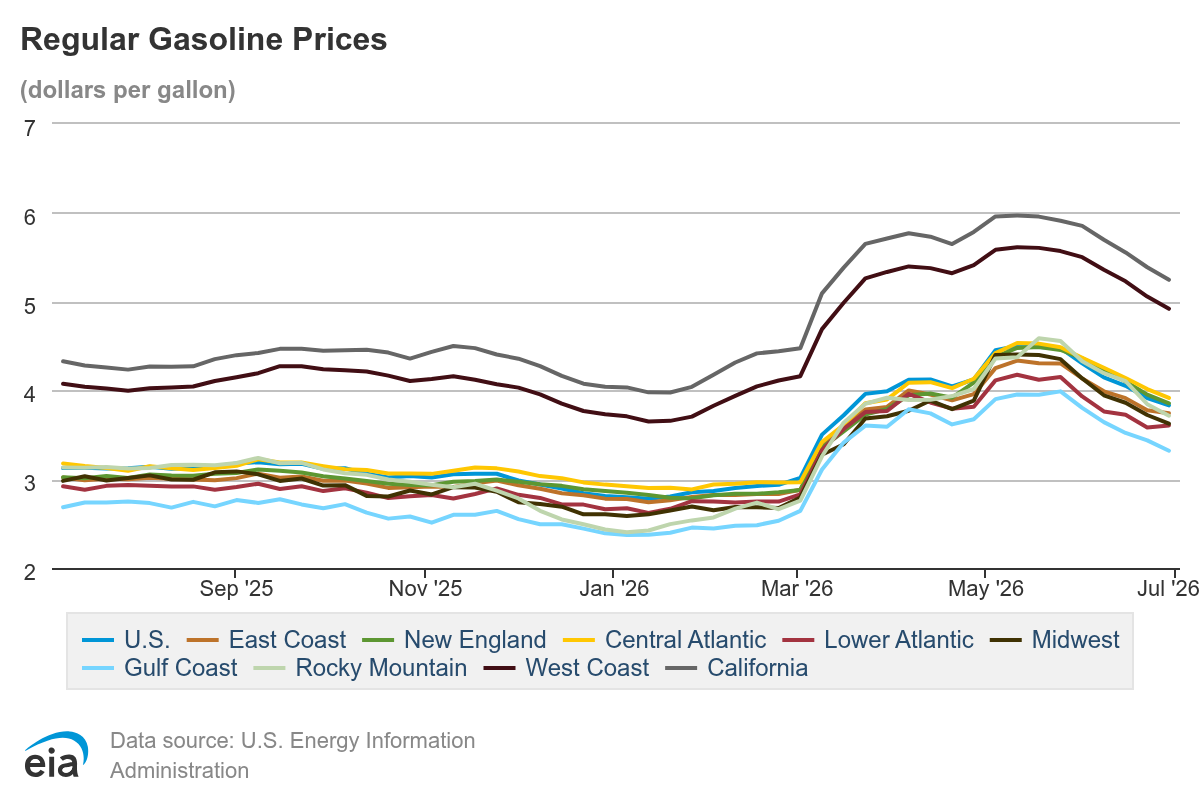 |
| Turbulence in the Mideast has historically raised U.S. gas prices, but they’re typically faster to rise than to fall. Image: U.S. Energy Information Administration |
TipSheet: Gas Prices Still Fuel Local Environmental Stories
By Joseph A. Davis
Journalists drive cars, too — and are rarely paid well enough not to worry about the price of a fill-up. So for most of us, gas prices are already a local story.
What, then, should you report to your neighbor? Whether or not you have a strictly local audience, people are thirsty for this information (even if they don’t own oil stocks).
Gas prices matter more to
people who are working class,
live in rural areas or commute
long distances to low-paying jobs.
You probably know already that gas prices matter more to people who are working class, live in rural areas or commute long distances to low-paying jobs.
And it’s said that smart gas-buyers can help the allegedly “free” market to set a better price. (A TipSheet trade secret: The cheapest fill-ups are often at those cash-only places. Taxes probably have something to do with it).
The backstory
The upcoming elections — even just the midterms or primaries — may tell us a lot about potential angles on energy reporting. We will probably find out, for instance, that the high gas prices (yes, they will still be high at election time) hurt GOPers and help Dems.
This has happened before. Gas prices were part of President Jimmy Carter’s downfall. Academics have studied the connection.
Historically, political and military turbulence in the Mideast has raised U.S. gas prices. Typically, they have risen quickly after crude oil price hikes — but fallen slowly after oil prices subside.
For the record, gasoline prices have jumped this time because the Trump administration’s war on Iran has closed the Gulf of Hormuz. We don’t need to explain it by pointing to a dastardly conspiracy. (Well, to be precise, we have not found any yet, but you may find one if you look hard enough).
Story ideas
- Do you live in a region where gas prices are typically higher than the national average — or lower? You might start with this explainer of regional gasoline price differences. Why do regions differ? California, for instance, has special laws and pollution-control needs, while the Gulf Coast is where the petroleum already is.
- Where are the refineries in your area (if any)? Check this refinery locator map, and you will see they are not evenly distributed among regions. Talk to refiners about how their fuel is distributed and marketed. Do refiners own gas stations? What are prices there?
- Go to local gas stations and talk to owners and operators about how their prices are set.
- Is there enough refining capacity in the U.S. to keep gasoline and diesel prices at reasonable levels? Or is it an “oligopoly?” Do regional price variations help answer this question? Can government do anything to raise refining capacity? What are the antitrust implications?
- Are high gas prices influencing whether people choose to buy gas cars versus electric vehicles? Talk to (we didn’t say trust) dealers. Go to dealerships and talk to prospective buyers.
- Go to a truck stop and talk to truckers about diesel prices. Do owner-operators see it differently than salaried drivers?
- Do your local prices vary for branded versus “independent” stations? Are the independents really independent? Where do they get their gas?
- “Rack prices” are what the refinery gets when it fills a tanker truck. Find out about yours by checking this price chart. Do the changes track variations in crude oil prices? What about changes at the pump?
- All 50 states (plus Washington, D.C.) tax gasoline, but the rates vary widely. Revenues typically go to roads. Has your state proposed suspending fuel taxes during the current price surge? Have they acted?
Reporting resources
- GasBuddy: This site/app is a favorite for people looking for a station that sells low-priced gas.
- American Automobile Association: AAA represents the interests of auto drivers. It also has a handy guide to finding low-priced gas, down to the county level.
- Energy Information Administration: This quasi-independent bureau of the Energy Department has lots of info about gas prices — especially at state and national levels. Start here but look around their site.
- American Fuel & Petrochemical Manufacturers: This is the refiners’ lobby group. Refiners are the ones who actually produce fuel.
- Consumer Federation of America: This is really a consortium of consumer advocacy groups, some of which care about gas prices.
[Editor’s Note: For more on the topic, visit our energy topic on the beat page, with more than three-dozen energy-related stories, plus energy headlines from EJToday.]
Joseph A. Davis is a freelance writer/editor in Washington, D.C. who has been writing about the environment since 1976. He writes SEJournal Online's TipSheet, Reporter's Toolbox and Issue Backgrounder, and curates SEJ's weekday news headlines service EJToday and @EJTodayNews. Davis also directs SEJ's Freedom of Information Project and writes the WatchDog opinion column.
* From the weekly news magazine SEJournal Online, Vol. 11, No. 26. Content from each new issue of SEJournal Online is available to the public via the SEJournal Online main page. Subscribe to the e-newsletter here. And see past issues of the SEJournal archived here.
SEJ Publication Types:
Topics on the Beat:
Region:
Visibility: