

SEJournal Online is the digital news magazine of the Society of Environmental Journalists. Learn more about SEJournal Online, including submission, subscription and advertising information.
September 3, 2025
 |
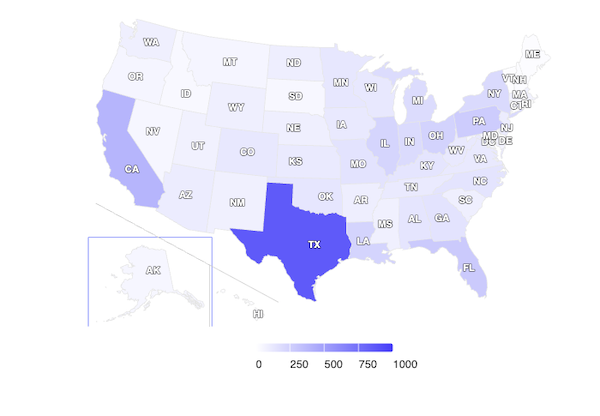 |
| A chart showing U.S. greenhouse gas emissions by state in 2022. The Trump administration is planning to stop collecting the data. Image: U.S. Environmental Protection Agency GHG Inventory. |
TipSheet: The Time To Make Local Stories With GHG Inventory Data Is Now
By Joseph A. Davis
 |
If you don’t know who’s emitting the most greenhouse gases in your area, this could be your last chance to find out. The Trump Environmental Protection Agency is trying to hide the data. So use it or lose it.
The EPA has been collecting the numbers since at least 1990. Not only was it required by the U.N. climate treaty, but it guided U.S. efforts to reduce emissions. Also, it helped environmental journalists find important and relevant stories.
Sharon Lerner of ProPublica broke the news this spring that the EPA was deep-sixing the GHG emissions inventory. Many others (may require subscription) have been following it since then.
But we have to give major kudos to the Environmental Defense Fund, which put in a Freedom of Information Act request for the missing data — and got it and published it. Good for them. Good for us.
Why it matters
Well, start with killer heat waves, massive wildfires and Category 5 hurricanes. Did we mention catastrophic killer flash floods? Lives are at stake.
The efforts by the coal, oil, gas and utility industries to silence and discredit the scientific truth about climate change have been going on for decades.
The war on the public’s awareness of
climate change and action to reduce
emissions by Donald Trump has been
going on for most of the past decade.
And the war on the public’s awareness of climate change and action to reduce emissions by Donald Trump (many of whose biggest donors are fossil fuel interests) has been going on (may require subscription) for most of the past decade.
It’s worth keeping in mind that, while the GHG data is about the best available, it is not perfect. It is a mix of measured and estimated numbers. Some of it is reported by the emitters and some is estimated by the EPA. It varies from year to year.
The good news is that the data includes multiple gases — both sources and sinks. Since data has been collected over many years, you can find time series and trends.
Story ideas
- Who are the major GHG emitters in your audience area? Are those companies or industries important to the area’s economy?
- Are there any GHG emissions that are easy to fix? We think, for example, of methane leaks from natural gas operations. Or landfill gas. What do such emitters say about their intentions to clean up?
- How do your local landfills score for methane emissions? Do they collect off-gassed methane? Do they plan to? Do they use it for some good purpose?
- What are the agricultural sources of GHGs in your area? Feedlots? Manure lagoons? Rice culture? Talk to farmers, ag schools and county extension agents.
- What portion of your area’s emissions comes from fossil fuel-burning vehicles? What measures has your area taken to minimize vehicle emissions? EV chargers? HOV lanes? Auto emission inspections? EV or hybrid buying co-op? Bike lanes and bike paths? Walkability? Transit?
- What are the sources of utility power in your area? Do you have coal plants and are they scheduled for closure? Are any gas plants used for baseload or peaking? Are there nonpolluting sources like solar, wind, hydro or geothermal?
- What industrial sources show up in your area? Petrochemical plants? Cement operations? Waste incinerators? Fertilizer plants?
- Building emissions are an often overlooked GHG source. Do area governments encourage people to switch from gas and oil heat to electric and heat pumps?
Reporting resources
- Local governments: Cities, counties and even regional councils of government often take measures to mitigate climate. They may be addressing major sources in your area.
- State environmental agencies: This list of state agencies involved in air permitting, energy policy planning and public utility regulation is a good starting point.
- American Association of State Climatologists: This is largely a professional association.
- Citizens’ Climate Lobby: A grassroots group. Most importantly, it has local chapters, so find yours.
- United States Climate Alliance: Another grassroots group, focused more at the state level.
[Editor’s Note: For more, visit the Topics on the Beat: Climate Change page, which includes a variety of SEJournal stories and recent EJToday headlines.]
Joseph A. Davis is a freelance writer/editor in Washington, D.C. who has been writing about the environment since 1976. He writes SEJournal Online's TipSheet, Reporter's Toolbox and Issue Backgrounder, and curates SEJ's weekday news headlines service EJToday and @EJTodayNews. Davis also directs SEJ's Freedom of Information Project and writes the WatchDog opinion column.
* From the weekly news magazine SEJournal Online, Vol. 10, No. 30. Content from each new issue of SEJournal Online is available to the public via the SEJournal Online main page. Subscribe to the e-newsletter here. And see past issues of the SEJournal archived here.
SEJ Publication Types:
Topics on the Beat:
Region:
Visibility: