



SEJournal Online is the digital news magazine of the Society of Environmental Journalists. Learn more about SEJournal Online, including submission, subscription and advertising information.
August 20, 2025
 |
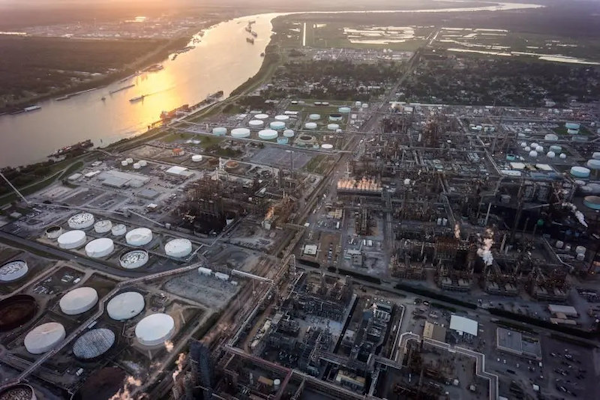 |
| Louisiana’s Cancer Alley, where front-line communities are disproportionately exposed to pollution, had secured federal dollars to install air monitors, but their projects are now at risk. Photo: Felton Davis via Flickr Creative Commons (CC BY 2.0). |
Voices of Environmental Justice: ‘People Will Die’ — Stories Behind Trump Budget Bill
By Yessenia Funes
Months before President Donald Trump’s budget bill — yes, the one errantly called the “One Big Beautiful Bill” — became law, independent investigative journalist Antonia Juhasz was already preparing to cover it. She just didn’t know it yet.
For Rolling Stone, she was interviewing residents of Louisiana’s Cancer Alley, where polluters reign. There, the people had organized and managed to secure federal dollars to install air monitors. All that work appears lost after the law’s passing.
The bill is the latest iteration of the Trump administration’s attack on former President Joe Biden’s historic effort to weave environmental and climate justice into the nation’s fabric.
There’s no separating the law from every other
Trump-era policy attacking people of color,
queer people, immigrants, working-class people
and the planet we all need to survive.
And that’s the top-line item reporters must write about. There’s no separating the law from every other Trump-era policy attacking people of color, queer people, immigrants, working-class people and the planet we all need to survive.
The story around Trump’s budget bill didn’t end when he signed it on July Fourth. For journalists who care about environmental justice, the ramifications will require stories for years to come.
Trump’s new megabill, coupled with every other egregious action his administration has taken, is creating a “different atmosphere” for front-line communities and especially immigrants, said Marianne Engelman-Lado, former deputy general counsel for environmental initiatives at Biden’s Environmental Protection Agency, who is now the director of New York University’s Environmental and Climate Justice Lab.
“We’re seeing a change in who will come out, who will speak, who can raise their voice, which has been so important to lifting up environmental justice in communities around the country,” she said.
The new law’s impacts on the country’s most vulnerable feel endless. I can’t fit every detail of its 330 pages into a single column, but environmental journalists should be keeping a close eye on a few key points. The law touches nearly every facet of our lives — from the food on our kitchen tables to the energy sources powering our dining room lights.
And Juhasz hasn’t shied away from holding the powerful accountable. A veteran journalist of over 20 years, Juhasz was digging into the Trump presidency for Rolling Stone before he even won in November. It’s high time that we all step up and commit to the stories that matter most.
The Inflation Reduction Act’s end
A major story to watch is the law’s dismantling of Biden’s landmark climate legislation, the Inflation Reduction Act.
While Trump had already begun freezing funds the act allocated to cities, states and nongovernmental organizations, his budget bill formalized these actions by rescinding the IRA’s $31.7 billion unobligated funds, where grantees had not yet signed a contract with the federal government.
Across the country, grassroots groups,
municipalities, tribes and corporations
applied for federal grants to develop
clean energy, mass transit, fisheries and more.
Over 10,000 projects were supposed to be funded with these dollars. Across the country, grassroots groups, municipalities, tribes and corporations applied for federal grants to develop clean energy, mass transit, fisheries and more.
A lot of that remains at risk — including the air monitors that people in Cancer Alley were hoping to install to protect their health. Research has found time and time again that people of color face higher rates of exposure to air pollution than white people. Air monitors can help communities build cases against polluters that may be breaking laws or recklessly diminishing local air quality.
Instead, Trump’s budget bill pours more money into the fossil fuel industry, making it more wealthy and powerful. And that’s dangerous for the families who live closest to the industry’s power plants, refineries and pipelines.
“The whole idea of the Inflation Reduction Act was to flood the nation with money to support renewable energy … and then also give local front-line communities the tools to take on fossil fuels and other polluters in their communities,” Juhasz said. “It wasn’t perfect, but it was a unique and robust way of looking at these problems.”
Every single group or city that lost money is a story. Climate news site Grist has an in-depth map of all the IRA recipients for anyone who needs a place to start.
“What is going to be the myriad, new additional hardships that local communities are going to have to confront in their day-to-day lives, while also now facing a more emboldened fossil fuel industry and a worsening climate crisis with fewer tools with which to do it?” Juhasz asked.
An empowered fossil fuel sector
 |
The industry isn’t just getting more money and power. It’s getting more access to land. Trump’s budget bill forces dirty lease sales to happen across the U.S.
Alaska, in particular, is set to see increased oil and gas expansion due to the law’s new requirements. The Arctic National Wildlife Refuge, a 19 million-acre expanse of public lands on Alaska’s northern coast, is considered sacred by the Gwich’in Indigenous peoples because the Porcupine caribou herd visits the coastal plain every year to calve their young. The Gwich’in rely on the caribou for sustenance and culture. Fossil fuel development is expected to disrupt their habitat and health.
“This is something that the Native Alaskans have fought against for decades,” said Rebecca Bratspies, a CUNY School of Law professor. “Not only are we going to have destruction of one of the last pristine areas in Alaska and vital habitat for endangered species, but also traditional lands of peoples who have been custodians of that land for millennia in order to produce more fossil fuels, which is going to drive that cycle of climate destruction that is already threatening Alaska.”
Indigenous peoples face unique threats as Trump’s budget bill begins its rollouts. Many tribes and nations are dependent on the federal government for financial assistance through the Bureau of Indian Affairs and other agencies. Many Indigenous peoples remain in deep relationship with the land, too, often fishing or hunting for their meals or needs. If the land or water becomes contaminated, what then?
A major health crisis
Fossil fuel expansion anywhere threatens the well-being of nearby flora and fauna — humans included. Trump’s budget bill threatens to strip at least 17 million Americans of their health coverage at a time when they’ll need it the most.
The law adds new work requirements for Medicaid recipients, which will be especially burdensome on disabled people, explained Mara Youdelman, the National Health Law Program’s federal advocacy managing director.
Disabled people are among the most vulnerable to climate-fueled impacts, such as heat waves, wildfires, floods and more. Even those who maintain their health care are likely to see higher costs as hospitals and providers lose access to federal funds.
‘I would love to see reporters make that
direct connection of how exposure to
environmental toxins and pollution,
coupled with a lack of access to
health care, impacts people’s lives.’
— Mara Youdelman,
National Health Law Program
“I would love to see reporters make that direct connection of how exposure to environmental toxins and pollution, coupled with a lack of access to health care, impacts people’s lives,” Youdelman said. “People will suffer more. People will have their medical conditions left untreated. And people will die.”
Front-line communities that are disproportionately exposed to pollution or environmental harms — like the predominantly Black towns in Cancer Alley — need reporters who will dig deep to expose the health inequities that this new law will create.
So will the people who are left behind during climate disasters. When a family is trying to submit the necessary paperwork to the Federal Emergency Management Agency to rebuild their home, will they be worrying about verifying their Medicaid eligibility?
Verifying eligibility is hard to do, explained Naomi Zewde, an assistant professor of health policy and management at UCLA. “It’s really cumbersome and almost impossible for people to do. That’s the whole purpose of it.”
These issues are only a slice of the havoc Trump’s budget bill will wreak across the country — but they’re a start. More environmental justice stories remain on food access, energy costs, immigrant rights, language access, housing and the list goes on.
If you need resources to begin your reporting, I’ve got you:
- The Center for Progressive Reform’s Project 2025 Tracker is keeping tabs on all the ways the Trump administration is making this nightmare of a plan real.
- Grist has a helpful interactive map tracking all the federal dollars earmarked for climate and environmental projects through the IRA and the Bipartisan Infrastructure Law. Many of these projects likely lost funding. Each example is a story.
- The Climate Program Portal, developed by research firm Atlas Public Policy, is also tracking these dollars, though you have to register and sign up to gain access.
Yessenia Funes is an environmental journalist who has covered the justice beat for a decade. She publishes a creative climate newsletter called Possibilities. Funes has written for publications like Atmos, Vogue, Vox, New York magazine, The Guardian and more. Her approach to storytelling amplifies the voices of those on the frontline of our present-day ecological crises. Her reporting has taken her to the West Bank, remote Indigenous communities in Nicaragua, the hostile desert of the American Southwest and post-Hurricane Maria Puerto Rico.
* From the weekly news magazine SEJournal Online, Vol. 10, No. 29. Content from each new issue of SEJournal Online is available to the public via the SEJournal Online main page. Subscribe to the e-newsletter here. And see past issues of the SEJournal archived here.
SEJ Publication Types:
Topics on the Beat:
Visibility: