

SEJournal Online is the digital news magazine of the Society of Environmental Journalists. Learn more about SEJournal Online, including submission, subscription and advertising information.
September 2, 2026
 |
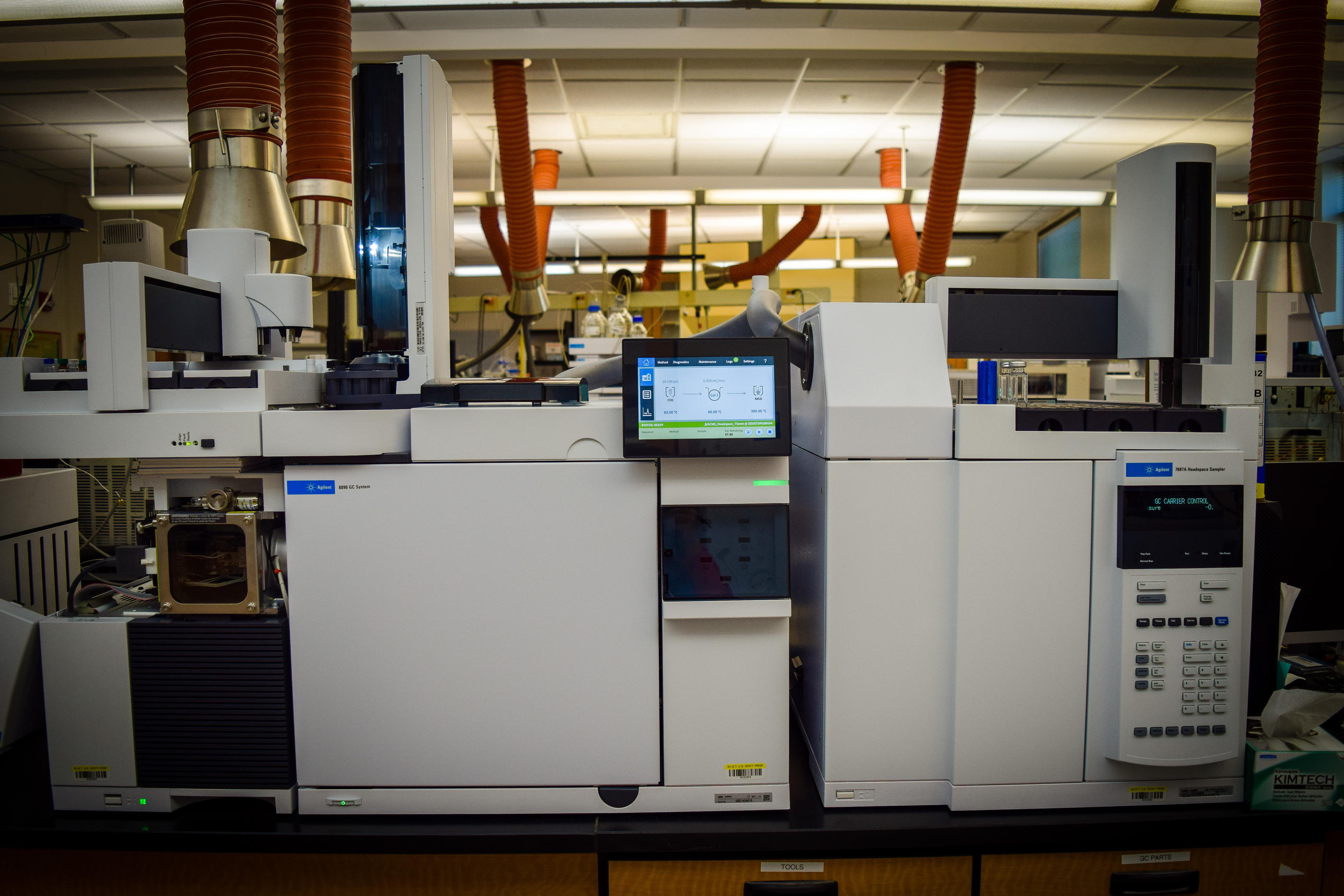 |
| Mass spectrometers, like the one above, can analyze chemical components, such as those in hazardous compounds. But secrecy practices can keep journalists — and the public — from learning how we’re exposed to those hazards. Photo: C. Burdette/National Institute of Standards and Technology (United States government work) |
WatchDog Opinion: ‘Trade Secrets’ Keep Journalists, Public in the Dark
By Joseph A. Davis
It may be the oldest dodge of all for keeping information about environmental health threats from inquiring journalists: trade secrets. The reasons for secrecy are usually poorly verified and documented.
WatchDog thinks they’re almost always baloney. But we lack the documentary evidence to prove this. That’s the beauty of trade secrets.
After you are done heaping blame on companies, Congress, the U.S. Environmental Protection Agency and the intellectual property lawyers — save a wee bit for the environmental groups and journalists who haven't legally challenged it.
What’s a trade secret?
WatchDog calls them “trade secrets” skeptically. Some companies call them “proprietary information.” Or “sensitive information.” Or “confidential business information.” Col. Sanders called it a "secret recipe,” but it wasn’t (find it here).
We live in an age of mass spectrometry. It sees almost everything, and it does not lie. We love us some Kentucky Fried, but the mass spectrometer will go on forever with boring chemical signatures of the herbs and spices.
Fact is, the Colonel never patented the secret blend — that would have required him to disclose it. What he did patent was breading and deep frying. Scaring you was the point. Intellectual property lawyers know this.
The situation is similar with the “secret” formula for Coca-Cola — which is locked in a vault on public display in an Atlanta museum. (The vault is displayed, not the recipe). Pure theater.
In the world of environmental journalists,
most of the trade secrets are chemical
identities. But mass spectrometry is
really good at picking them out.
In the world of environmental journalists, most of the trade secrets are chemical identities. But mass spectrometry is really good at picking them out.
The EPA has already disclosed the identities of a great many of the chemicals most hazardous to human health (see the “List of Lists”). What EPA hasn’t disclosed — and what the WatchDog thinks it should — is which hazardous chemicals, listed or not, are in the products people’s bodies are exposed to. Therein lies the spicy rub.
What do environmental laws require?
The situation is complex. It’s a fact that most of the major environmental laws (FIFRA, CAA, CWA, TSCA, SDWA, EPCRA, etc. — click the links; we don’t have room to spell them all out) say something about confidential business information. Each law is different in how it treats it.
In general, when companies are required by law to give chemical information to the EPA, the laws allow them to claim it is CBI. For decades, the claims just piled up at the EPA, which did not have enough staff to evaluate them promptly.
But the Catch-22 was this: Any information claimed to be CBI was usually by default kept secret by the EPA until the agency had approved the claim of secrecy. In this funhouse-mirror world, EPA evaluation backlogs worked to the claimant’s advantage. Free pass.
Let’s look at the worst and the best: One is the aforementioned FIFRA, or Federal Insecticide, Fungicide, and Rodenticide Act. The other is the Safe Drinking Water Act.
Fight over FIFRA health study disclosures
FIFRA is a very old law that Congress has amended many times. The 1910 version only tried to ensure that pesticides were actually as deadly as manufacturers claimed. The 1940 version put oversight of FIFRA in the Agriculture Department.
By 1972, the law was also trying to protect human health, and so was put under the newly formed EPA.
Environmentalists wanted disclosure
of health studies that could reveal
harmful effects — and the
chemical and ag industries did not.
But there was a big fight when Congress was working on the 1978 amendments to FIFRA. Environmentalists wanted disclosure of health studies that could reveal harmful effects — and the chemical and ag industries did not.
Industry worried that foreign competitors unconstrained by law would steal their expensive health studies and then submit them with application to their own governments. Or so they claimed.
The compromise enacted did allow the studies to be disclosed to, say, environmentalists in the United States, but required anyone getting them to sign what was effectively a nondisclosure agreement. It was called an “affirmation of non-multinational status.” Find it here.
The law made it impossible to publish the health studies in outlets that foreign companies could access. Which is to say, anywhere.
Safe water disclosures galore
The Safe Drinking Water Act of 1974, on the other hand, was loaded with disclosure requirements. At the time it was passed, the environmental movement reigned supreme in Congress.
One of SDWA’s requirements was that water utilities have to publish to their users — every year — a “consumer confidence report.” The CCR must disclose “detected regulated and unregulated contaminants, source water origins, and potential health effects.” They must also have a clear summary of any violations displayed prominently at the top.
SDWA has several other good disclosure requirements. For example, utilities must publish source water assessments. And if they violate pollution standards, they must notify customers promptly. For E. coli violations, notification must be within 24 hours. And other disclosures are also required.
Drinking water industry has its secrets
Wait a minute, you may ask, how can the drinking water industry have trade secrets?
First off, it is an industry and has several trade associations that actively lobby. Also, remember that a significant portion of water utilities are private companies. And even governmental water utilities have motives to downplay drinking water hazards. They do have to get elected (or appointed by electeds), and they really don’t want to panic their customers.
Most technologies to upgrade drinking water safety (think permeable membranes and carbon filtration) cost big bucks. It’s hard to get reelected or reappointed when ratepayers upset about higher bills are also voters. WatchDog will name no names, but examples are legion.
SDWA does not entirely solve this problem.
After 9/11, Congress required most utilities
to produce and file plans to protect their
systems from terrorist attacks or other
security risks like vandalism.
For example, after 9/11, Congress required most utilities to produce and file plans to protect their systems from terrorist attacks or other security risks like vandalism.
The problems arose from the fact that these plans — and how well systems complied with them — did not have to be publicly disclosed. The result was weak security and poor motivation to fix any vulnerabilities.
Even back then, more than two decades ago, drinking water systems were supposed to take cybersecurity measures. But the secrecy meant no one could figure out whether cybersecurity was implemented or working.
Today we know it is not. Recent headlines inform us that scores of U.S. water systems in many states have been hit by cyberattacks (feds suspect Iran). Blame whom you will — utilities, lobbyists, states, feds or the water grinch: We have been asleep at the switch. But utilities' desire for secrecy to protect their business interests is part of the problem. Who knew?
TSCA’s excess of CBI claims
It’s the Toxic Substances Control Act that generates the most CBI claims and the most controversy right now. TSCA regulates (and requires companies to tell the EPA) what chemicals are in their products.
After decades of dysfunction, Congress finally passed amendments (the “Lautenberg Act”) in 2016. It set health testing and disclosure (to the EPA) requirements for new chemicals going into commerce and a 10-year deadline for chemicals already in commerce. That’s a lot of chemicals and companies.
The 10-year deadline was up beginning in June 2026. That means CBI claims started expiring. It has become a full-employment time for intellectual property lawyers. The EPA was backlogged with claims as the year began. The agency published a list of all those expiring claims in April 2026. It also set up a mechanism for companies to ask for extensions of that deadline.
Bottom line: To quote Dylan, “Nothing is revealed.”
Who knew? The lawyers knew.
The water-drinking public needs to know, too. And it’s the job of journalists to tell them.
Joseph A. Davis is a freelance writer/editor in Washington, D.C. who has been writing about the environment since 1976. He writes SEJournal Online's TipSheet, Reporter's Toolbox and Issue Backgrounder, and curates SEJ's weekday news headlines service EJToday and @EJTodayNews. Davis also directs SEJ's Freedom of Information Project and writes the WatchDog opinion column.
* From the weekly news magazine SEJournal Online, Vol. 11, No. 30. Content from each new issue of SEJournal Online is available to the public via the SEJournal Online main page. Subscribe to the e-newsletter here. And see past issues of the SEJournal archived here.
SEJ Publication Types:
Topics on the Beat:
Region:
Visibility: