

SEJournal Online is the digital news magazine of the Society of Environmental Journalists. Learn more about SEJournal Online, including submission, subscription and advertising information.
July 8, 2026
 |
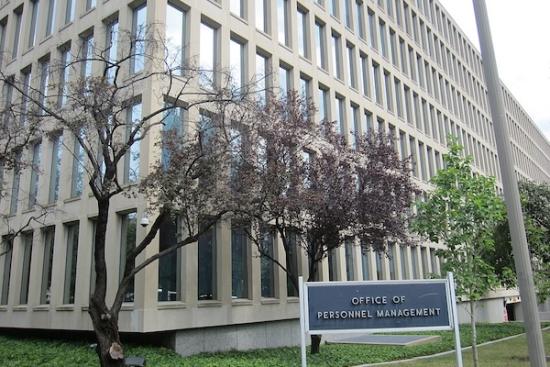 |
| The Trump Office of Personnel Management, which oversees hiring rules at most federal agencies, has proposed urging all federal government employees to sign nondisclosure agreements. Image: Another Believer via Wikimedia Commons (CC BY-SA 3.0). |
WatchDog Opinion: Trump Wants Nondisclosure Agreements for Federal Employees
By Joseph A. Davis
You say you want to talk to a government employee about the job they are doing to protect public health or the environment? Dream on. The Trump 2.0 White House wants to make this actually illegal.
Talking to employees of the U.S. Environmental Protection Agency has long been a challenge. It is common for political appointees to prevent reporters from talking to EPA scientists about the work they are doing for the taxpaying public.
The obstacles preventing journalists from talking to civil servants have actually been one of the major gripes of members of the Society of Environmental Journalists against the EPA.
NDAs could make it
civilly prosecutable for
a government employee to
disclose anything to a journalist.
Now the Trump 2.0 White House has proposed urging all federal government employees to sign nondisclosure agreements. NDAs, as those who are gag-ordered call them, will (or could) make it civilly prosecutable for a government employee to disclose anything to a journalist.
In other words, federal employees would have to go to court to show they had a right to talk to reporters.
A key word is civil. An NDA is a civil contract — meaning you cannot go to jail for breaking it (unless what you disclose is classified). But if you are a federal employee, you can quickly and easily lose your job. You are welcome to your martyrdom.
 |
Proposal draws widespread opposition
The news came out in late May via a release from the Trump Office of Personnel Management, which oversees hiring rules at most federal agencies. That accompanied a notice in the Federal Register that included a proposed draft text template for such NDAs.
It did not go over well. A coalition of open-government groups responded in June with a joint letter opposing the Trump NDA proposal. It was signed by at least 23 other organizations, including SEJ. Many of the signers were journalism groups.
“If adopted,” the signing groups wrote, “the rule would give the federal government a powerful weapon to silence public employees and trample on the free speech rights guaranteed to them by the United States Constitution.”
Here’s another excerpt from the groups’ letter:
“The agreement’s broad definition of non-public information could encompass a wide range of information that poses no threat to national security, government operations or other legitimate interests. An employee could violate the agreement by sharing something as inconsequential as the brand of coffee used in the office breakroom, so long as it’s not publicly known. But more significantly, the agreement would keep employees from speaking out on newsworthy subjects like the impact of policy changes on their duties or the conditions and safety of their workplace.”
Federal employees’ unions opposed the proposal, too. “OPM continues its efforts to silence federal employees,” American Federation of Government Employees President Everett Kelley said. “This proposed NDA is another attempt by the administration to purge the civil service of nonpartisan career employees and replace them with loyalists who won’t speak out against waste, fraud, and abuse.”
OPM allowed only a very short comment period for the NDA notice, ending in late June.
The devil is in the definition
Courts have long upheld the First Amendment rights of federal employees to talk about unclassified information.
One big problem with the proposed NDA rule will be the definition of just what federal employees are not allowed to talk about.
This proposal conjures up
categories of information
that have only vague definitions
and have virtually no legal standing.
The notice implies that it will include almost all nonpublic information, i.e., anything the public does not yet know about. This proposal, like many in the past, conjures up categories of information that have only vague definitions and have virtually no legal standing.
For example, the OPM talks of protecting “proprietary” information, presumably from companies. Does that include anything a company wants to keep quiet? It could go way beyond the Colonel’s secret recipe.
What makes “confidential” information confidential? Or "sensitive" info sensitive? Sensitive to whom? What makes “nonpublic” information nonpublic, other than the fact that people have not yet found out about it?
It would eventually take an army of lawyers to sift through such questions. Yet an array of existing laws, like the Whistleblower Protection Act, already protect federal employees' right to communicate.
[Editor’s Note: You can search some of the 30,000 comments about the NDA proposal to OPM on its website.]
Joseph A. Davis is a freelance writer/editor in Washington, D.C. who has been writing about the environment since 1976. He writes SEJournal Online's TipSheet, Reporter's Toolbox and Issue Backgrounder, and curates SEJ's weekday news headlines service EJToday and @EJTodayNews. Davis also directs SEJ's Freedom of Information Project and writes the WatchDog opinion column.
* From the weekly news magazine SEJournal Online, Vol. 11, No. 26. Content from each new issue of SEJournal Online is available to the public via the SEJournal Online main page. Subscribe to the e-newsletter here. And see past issues of the SEJournal archived here.
SEJ Publication Types:
Topics on the Beat:
Region:
Visibility: