




SEJournal Online is the digital news magazine of the Society of Environmental Journalists. Learn more about SEJournal Online, including submission, subscription and advertising information.
October 28, 2026
 |
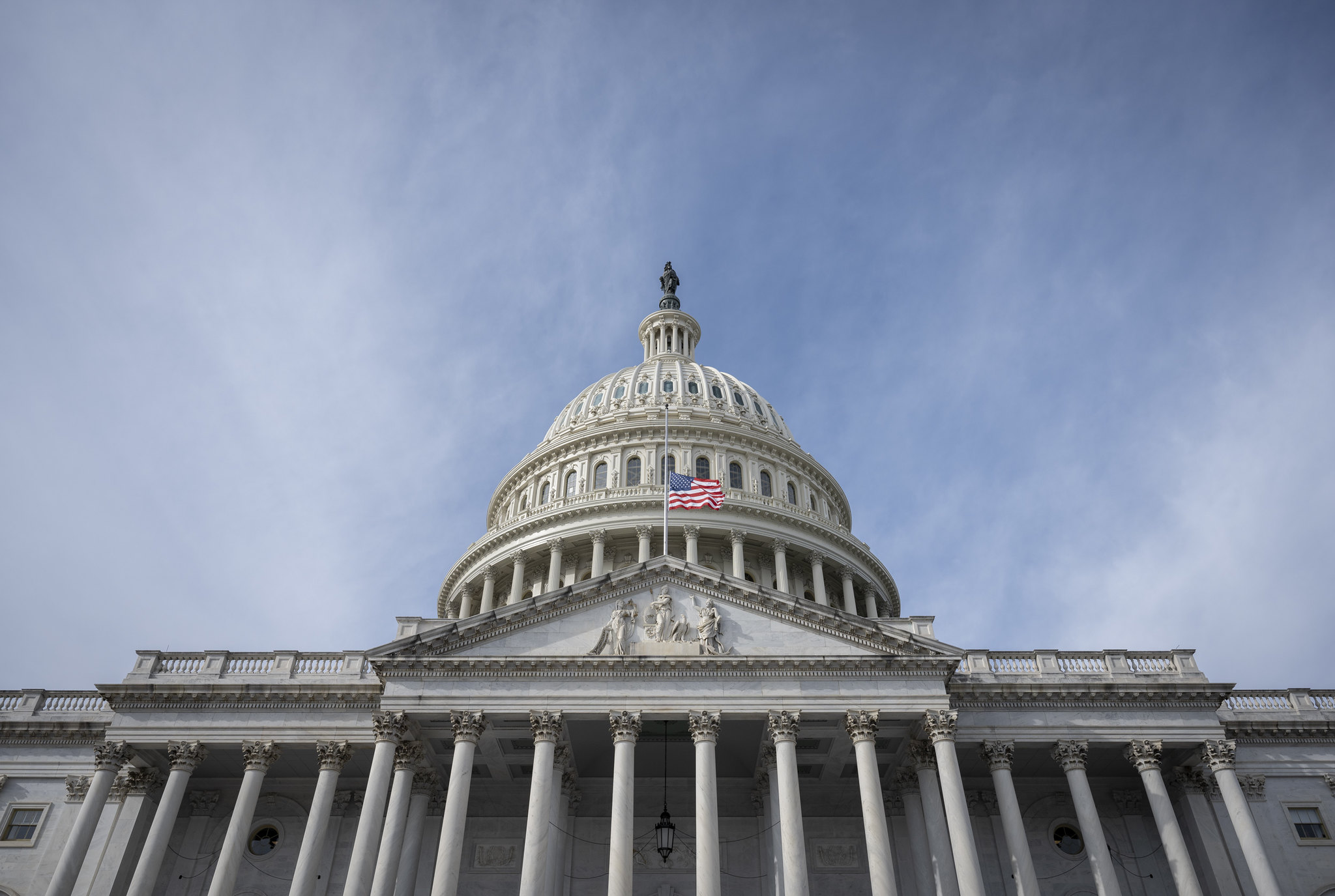 |
| A potential shift of power in Washington could have a major impact on press freedom issues, writes WatchDog Opinion. Photo: U.S. Department of Homeland Security via Flickr Creative Commons (United States government work). |
WatchDog Opinion: What’s at Stake for Press Freedom in the 2026 Elections?
By Joseph A. Davis
The 2026 midterm elections could profoundly help — or hurt — press freedom in the United States at a crucial time. Journalists need to cover this, for their own sake and for the future of the country.
We recently got a good-sized hint of what could be ahead when President Donald Trump, who has spent much of his second term assaulting the media and press freedom, announced he was kicking CNN, MS NOW and POLITICO out of the White House.
A court has restored their access temporarily, but Trump’s appeals (and his chicanery) are not exhausted.
Senators and congressfolk make a
big difference by either supporting or
opposing Trump’s attacks on the press.
Technically, Trump himself is not on the ballot — even though he asks supporters to vote as if he were. But senators and congressfolk make a big difference by either supporting or opposing his attacks on the press. Or being silent.
Perhaps much of the damage is already done.
Brendan Carr is already ensconced as chair of the Federal Communications Commission, where he threatens networks and comedians who use their First Amendment rights to criticize Trump. Or even laugh at him. We won’t name all the other appointees who have been enabling Trump.
But Congress can do a lot.
Congressional appropriations, oversight
The House has a decisive influence on appropriations. Almost everything the executive branch does depends on appropriations — and Congress has a well-established tradition of putting policy restrictions in spending bills. So, theoretically, they could forbid Trump from spending any money to sue newspapers or restrict media freedom.
Likewise, congressional oversight powers can have enormous effect.
Oversight committees have the power of subpoena and can cite uncooperative witnesses for contempt. Congress can even take executive agencies to court. But the deepest impact of oversight hearings themselves may be bad publicity. And the WatchDog must observe that publicity itself — good or bad — is largely in the hands of the media already.
Bipartisan press freedom bills
 |
WatchDog is so old he remembers when Congress used to pass press freedom bills. They would periodically amend the Freedom of Information Act to tighten it up.
These were bipartisan bills, cosponsored by the likes of former Sen. Patrick Leahy (D-Vt.) and John Cornyn (R-Texas). The last time that happened was 2016. Leahy has retired, and Cornyn lost the primary this time for not being Trumpy enough.
Another thing Congress could do is pass a reporter’s privilege law, also known as a shield law. That would protect journalists from being compelled to name confidential sources.
Congress almost passed such a bill in 2024. Forty-nine states (plus Washington, D.C.) have already passed some form of shield law — but Congress has not passed a federal law that would apply in federal courts. Yet.
Control over confirmations
If Dems take the Senate as well as the House, they will get the power of approving many future Trump appointments. To be sure, people like Carr and Attorney General Todd Blanche are already well-ensconced, but high officials leave office for all kinds of reasons (not all predictable).
The most important instance would be replacement of a Supreme Court justice. The court has a huge impact on press freedom. So far (knock on wood), the court’s interpretation of the First Amendment, in cases like Times v. Sullivan, has sustained press freedom. If Dems take the Senate, they could control confirmation of any new Supreme Court appointee.
A Democratic Congress also could
play a bigger role in either media
consolidation or its opposite.
A Democratic Congress also could — if it wanted to — play a bigger role in either media consolidation or its opposite (say, encouraging small, nonprofit, community-based media).
And if Democrats win control of Congress, they will also win the power to lard up must-pass megabills (e.g., reconciliation) with almost any other press freedom measures they choose. Bills that are veto-proof because they prevent government shutdown. Historically, both parties have done this.
What won’t change, and what’s unknown
There is certainly a substantial list of things Congress probably cannot change. Trump will keep insulting reporters. He will keep playing favorites in briefings. He will keep being enigmatic (or incoherent). He will keep filing multibillion-dollar nuisance libel lawsuits that go nowhere. He will keep lying.
In the end, we have to remind ourselves that the media themselves will also play a role in expanding or restricting press freedom. Whatever Congress does. Will the media hang together and form alliances to advance press freedom? Will it cover the erosion of the First Amendment as intensely as it covers mass shootings and celebrity divorces?
Much is unknown: The elections’ exact outcome. The elections’ integrity. The vagaries of war and terrorism. The severity of extreme weather. Scientific advances or neglect. Congress plays a role in these arenas, as well as the president. If it doesn’t roll over and abdicate its own authority.
Joseph A. Davis is a freelance writer/editor in Washington, D.C. who has been writing about the environment since 1976. He writes SEJournal Online's TipSheet, Reporter's Toolbox and Issue Backgrounder, and curates SEJ's weekday news headlines service EJToday and @EJTodayNews. Davis also directs SEJ's Freedom of Information Project and writes the WatchDog opinion column.
* From the weekly news magazine SEJournal Online, Vol. 11, No. 38. Content from each new issue of SEJournal Online is available to the public via the SEJournal Online main page. Subscribe to the e-newsletter here. And see past issues of the SEJournal archived here.
SEJ Publication Types:
Topics on the Beat:
Region:
Visibility: