




SEJournal Online is the digital news magazine of the Society of Environmental Journalists. Learn more about SEJournal Online, including submission, subscription and advertising information.
October 21, 2026
 |
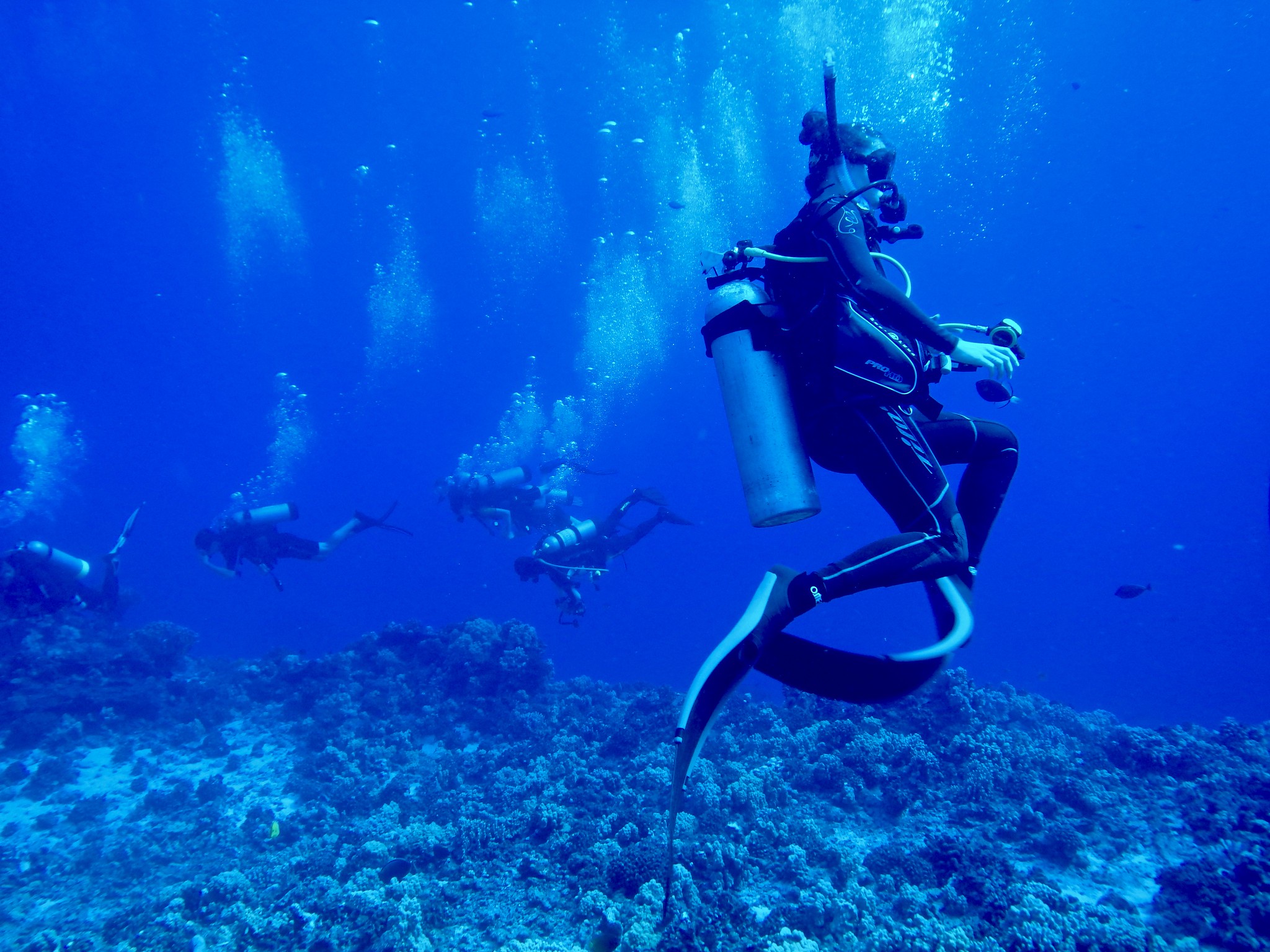 |
| Despite industry retraction and the loss of some ocean reporters in the past, the author argues recent years have seen an uptick in the quality of blue-beat reporting. Photo: Adam Reeder via Flickr Creative Commons (CC BY-NC 2.0). |
Feature: Reporting From the Blue — An Ocean of Opportunities
By David Helvarg
Whether running out of air 80 feet underwater in Fiji, being held at gunpoint at the beach in El Salvador or losing an engine cowling while flying with the Coast Guard in the wake of a Texas hurricane, it’s always an adventure to report on, above or below the 71% of the planet that’s wet and salty.
Plus, you tend not to encounter a lot of competition. Actually, I’d like to see more.
I spent almost 30 years of my career in a schizoid state doing war reporting, and print and broadcast investigations of the military, police, politics and public health, so I could go home and bodysurf or go diving.
Then after writing my first book, “The War Against the Greens,” I got to write the one I’d always wanted to, “Blue Frontier,” which profiles the history, environment, policies and people that make up our maritime nation.
I decided to refocus my
journalism almost exclusively
on the marine environment.
Shortly after “Blue Frontier” came out, I decided to refocus my journalism almost exclusively on the marine environment, recycling the book into a nonprofit of the same name that today generates additional books, articles, documentaries, a Writers For the Sea forum and a podcast/radio show about the ocean.
In addition, wanting to establish a media award for ocean reporting, I partnered with Wendy Benchley to found the Peter Benchley Ocean Awards in honor of her late husband, who was the author of “Jaws” and dedicated most of his post-“Jaws” life to protecting sharks. Today, the Benchley Awards’ eight categories include “excellence in media.”
The need for a stronger ‘blue beat’
I’ve long proselytized — at Society of Environmental Journalists conferences and elsewhere — for a stronger “blue beat,” arguing that the only resources not fully exploited in the ocean are good investigative reporting and narrative nonfiction tales of coastal and ocean communities, both human and wild.
When I was young, my favorite TV show was “Sea Hunt,” in which actor Lloyd Bridges played underwater investigator Mike Nelson in black and white for half an hour a week. I was so enamored that I grew up to become a diver and a private investigator (a useful side gig when you’re working as a freelance journalist).
And of course, I always sought opportunities to report from the blue, doing stories on the Navy, Antarctica, white sharks, an underwater science lab (that oceanographer Sylvia Earle invited SEJ members to visit) and offshore oil — including going out on two BP deep-drilling platforms in the Gulf of Mexico and returning years later to cover another BP platform’s blowout and spill, flying above 100 bottlenose dolphins and a humpback whale trapped and dying in an oil slick.
The late Wall Street Journal editor and Institute for Journalism & Natural Resources founder Frank Allen used to say, “Environmental stories don’t break, they ooze.”
I often had to sell environmental
reporting as adventure or
law enforcement stories.
As a freelancer, this meant I often had to sell environmental reporting as adventure or law enforcement stories. Thus, I reported on a multimillion-dollar black market in illegal salmon caught in high seas driftnets; profiled NOAA “fish cops” chasing crabbers across Canada’s maritime border; and explored various coral reefs for dive magazines. I even got to write a whole book, “Rescue Warriors,” on the U.S. Coast Guard, opening with Hurricane Katrina in 2005.
Ocean reporting’s shifting tides
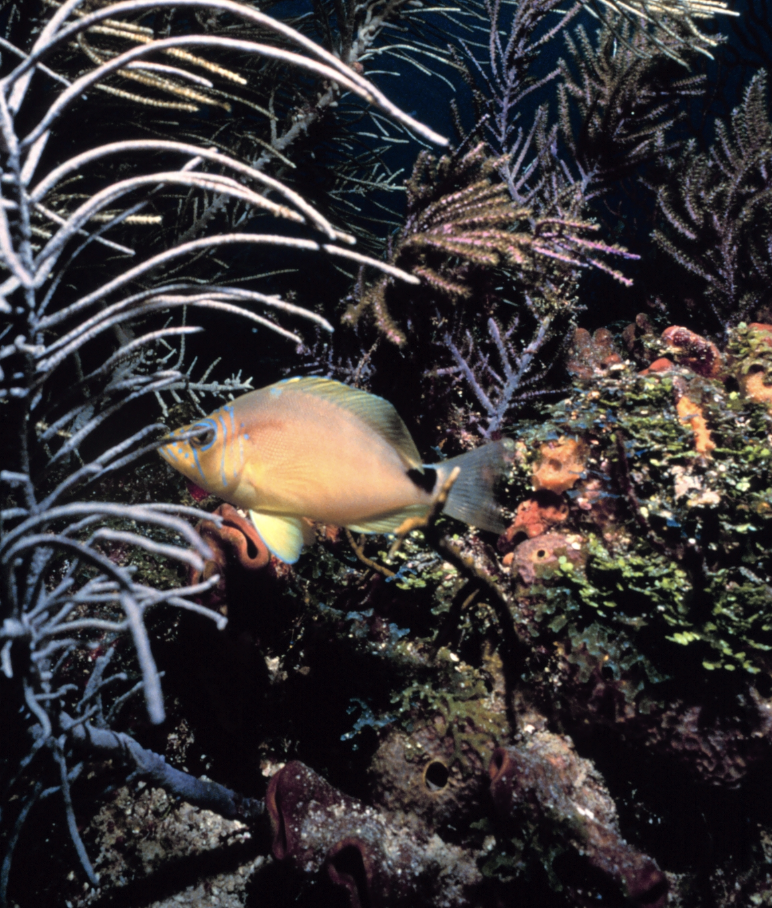 |
| Butter hamlet fish with sea rods. Photo: Florida Keys National Marine Sanctuary/Cmdr. William Harrigan via NOAA.gov. |
Despite the decline of print journalism and the loss of a good half-dozen newspaper-based ocean reporters around the turn of this century, more recent years have seen an uptick in the quality of blue-beat reporting.
This includes the work of four Associated Press reporters who exposed slavery at sea in the illegal fishing sector, as did The New York Times’ Ian Urbina, who went on to write the book “The Outlaw Ocean” and launch The Outlaw Ocean Project, an investigative nonprofit journalism organization.
The Pulitzer Center also has established an ocean reporting network under editor Jessica Aldred.
Other good ocean reporters include Chris Mooney, Rosanna Xia and SEJ stalwart Mark Schleifstein. Additional ocean media figures include documentary director Louie Psihoyos, who won an Oscar for “The Cove,” longtime National Geographic photojournalist Brian Skerry, and book authors Susan Casey and Carl Safina.
And, while several outlets, such as Mongabay, The Guardian, Time magazine and The Economist, continue to make space for ocean reporting, others, including The Washington Post and once-venerable CBS News, are reducing their ocean and climate coverage as part of a new billionaire ownership alignment with the Trump administration.
Reporting on a rapidly changing ocean
Recently I’ve talked to several young people interested in becoming ocean journalists, including marine lab grad students and laid-off, early-career NOAA employees.
I’ve told them that even though it’s harder to do freelance journalism today than it was 30 years ago (when print magazines and other outlets paid significantly more) and will require more business savvy and multiplatform fluency on their part, they should follow their passion for at least five years and can then reevaluate.
There’s a whole blue world
of stories in the planet’s
rapidly changing oceans.
In the meantime, there’s a whole blue world of stories in the planet’s rapidly changing oceans, impacting and being responded to by Indigenous and coastal communities, and an array of industries from fishing, aquaculture and shipping to energy, defense and marine tech.
There are now salmon in the Arctic, fewer krill in the Antarctic, a marine forest crisis (which I write about in my new book) and increasing impacts from marine heat waves.
There’s also eDNA, which is the biggest thing in marine science since the introduction of scuba, plus the ongoing deep-sea mining controversy and political conflicts with environmental consequences in the South China Sea, the Persian Gulf and the Arctic — and all this even as global food security, climate change and migration are increasingly tied to the ocean.
I’ll keep diving into these and other ocean stories, hoping more journalists will join me.
[Editor’s Note: For more on this topic, see our Water and Oceans Topic on the Beat page, which includes more than four dozen stories from the pages of SEJournal, as well as a Covering Climate Solutions special report on reporting ocean stories with an ocean and climate change toolbox. Plus, get the latest water and oceans headlines.]
David Helvarg is an author, co-host of the “Rising Tide” ocean podcast, executive director of Blue Frontier and a contributing writer at the Los Angeles Times. His latest book is “Forest of the Sea: The Remarkable Life and Imperiled Future of Kelp” (see our BookShelf review).
* From the weekly news magazine SEJournal Online, Vol. 11, No. 37. Content from each new issue of SEJournal Online is available to the public via the SEJournal Online main page. Subscribe to the e-newsletter here. And see past issues of the SEJournal archived here.
SEJ Publication Types:
Topics on the Beat:
Region:
Visibility: